OPINION: Should You Buy an EV Now or Wait for Solid-State Batteries?
If you are thinking about buying a Battery Electric Vehicle (BEV) today—or perhaps you’re already an owner eyeing a replacement in the next year—you’ve likely heard the whispers. A “battery revolution” is coming.
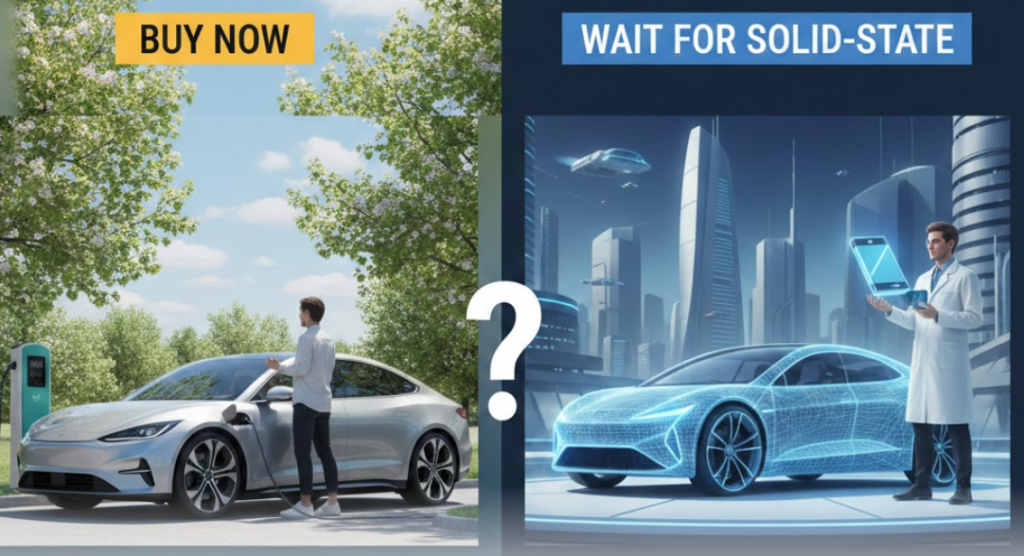
As major manufacturers announce breakthroughs in Solid-State Battery (SSB) technology, many drivers are asking the same question: Is now the right time to buy, or will my new car be obsolete the moment solid-state hits the road?
In this guide, we’ll break down the three “families” of solid-state technology, explain the chemistry in plain English, and look at the realistic launch dates for the cars you can actually buy.
But First, What is a Solid State Battery?
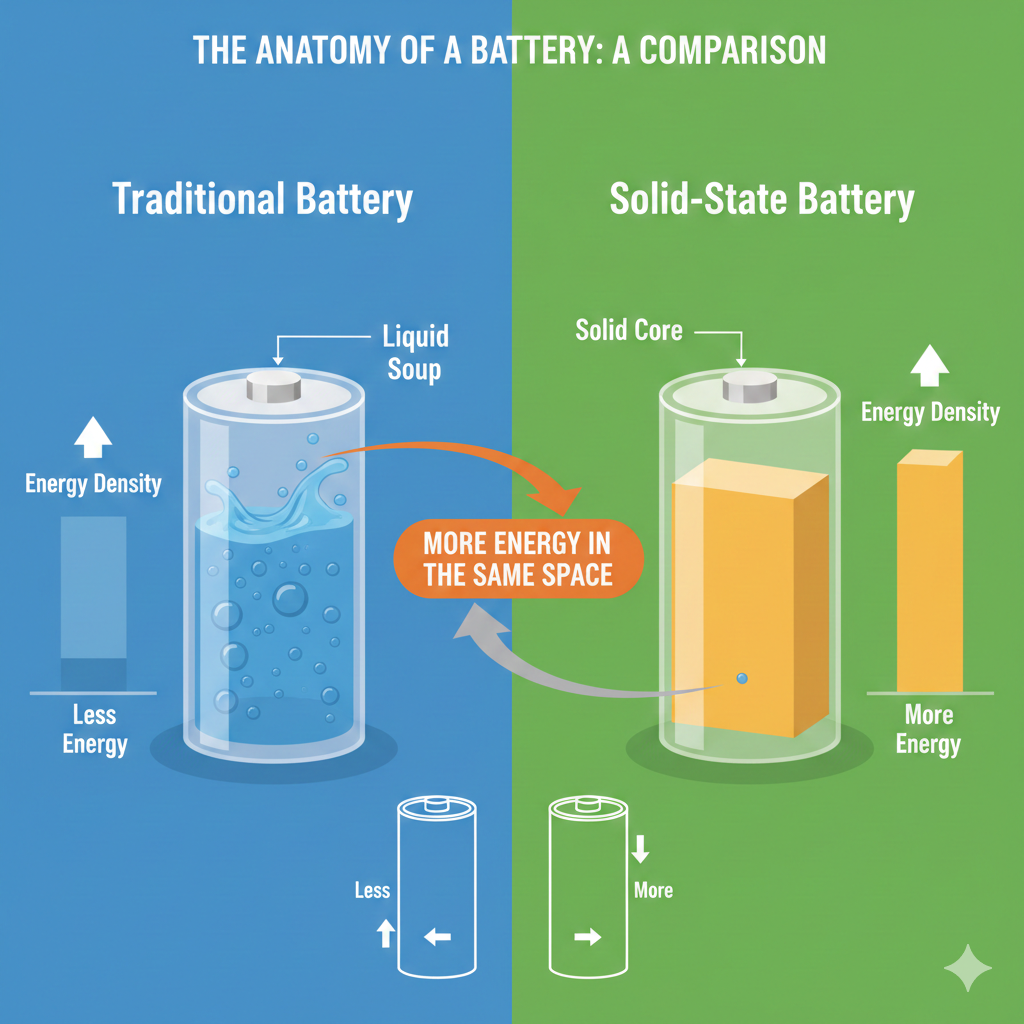
To understand the future, we have to look at the present. Your current BEVs from Tesla, Hyundai, or BYD, etc. uses a “liquid” electrolyte—a chemical soup that allows ions to move between the positive and negative parts of the battery.
Solid-state batteries replace that liquid with a solid material.
Why does this matter for you?
- Massive Range: They are much denser, meaning a battery the same size as your current one could take you twice as far (think 600+ miles).
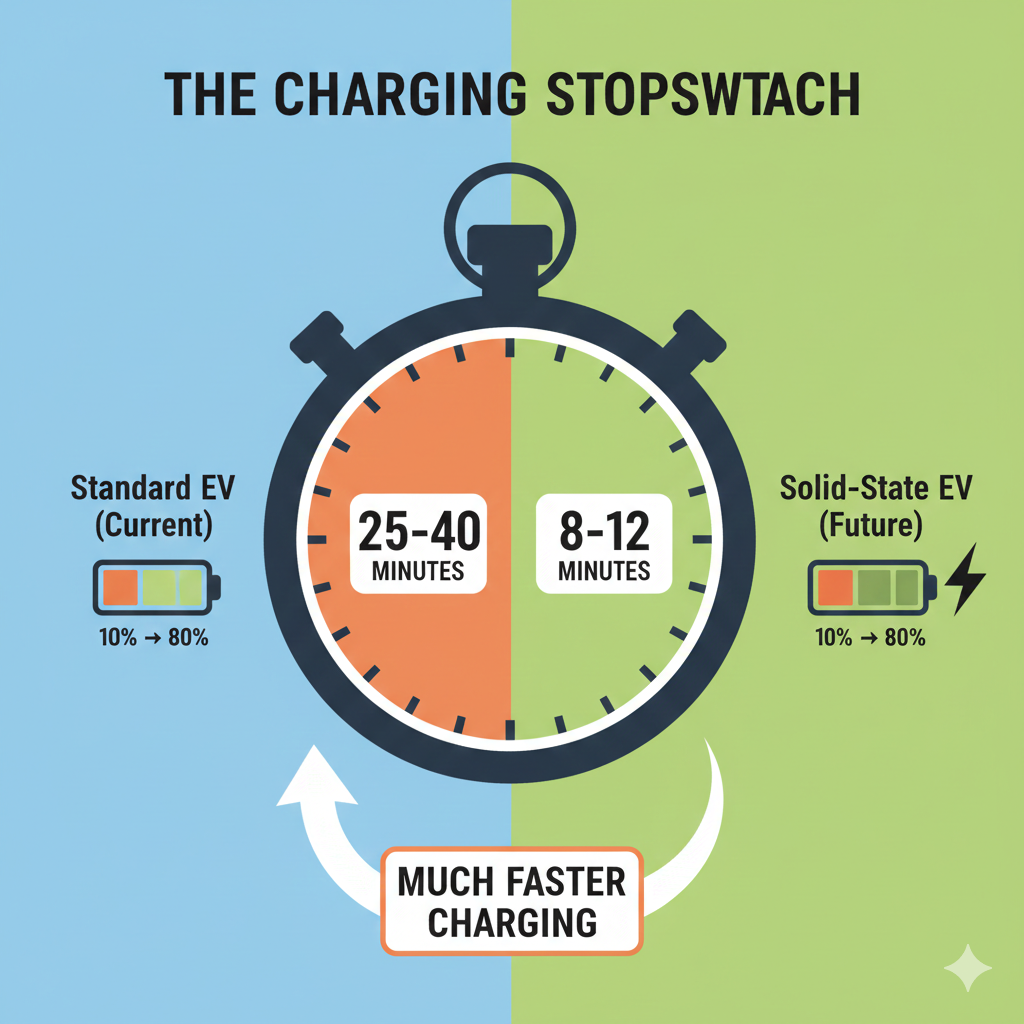
- Ultra-Fast Charging: Imagine adding 300 miles of range in the time it takes to grab a coffee—under 10 minutes.
- Enhanced Safety: Without flammable liquid inside, the risk of “thermal runaway” (battery fires) is virtually eliminated.
The Three “Families” of Solid-State Technology
The industry is currently split into three distinct chemical paths. Here is who is backing what, and when they are coming.
Path 1: Oxide-Based (The Stable Ceramics)
The Vibe: High-tech pottery. These electrolytes are hard, brittle, and incredibly stable at high temperatures.
- Pros: Exceptional safety; they won’t catch fire even under extreme stress.
- Cons: Because they are rigid, the “contact” between parts can fail as the battery expands and contracts during use.
- Key Players: Volkswagen (via QuantumScape), Mercedes-Benz, Honda, who are partnering with QuantumScape, ProLogium, Chery
- Realistic Timeline: Late 2020s. Volkswagen’s partner, QuantumScape, is currently scaling up production equipment for high volumes.
Path 2: Sulfide-Based (The Speed Kings)
The Vibe: The performance choice. Sulfides conduct lithium ions almost as fast as liquids.
- Pros: This is the tech that will give you “5-minute charging.” It’s the closest to liquid performance but with solid-state benefits.
- Cons: They hate moisture. If the battery casing is breached and air gets in, they can create toxic hydrogen sulfide gas (the “rotten egg” smell).
- Key Players: Toyota, BMW, Ford, Nissan who are partnering with Idemitsu Kosan, Solid Power, Samsung SDI.
- Realistic Timeline: 2027–2028. Toyota is aiming for a “high-power” debut in this window, likely starting with a Lexus performance model.
Path 3: Polymer-Based (The Early Birds)
The Vibe: Specialized plastics. This is the only tech actually on the road in limited capacity today.
- Pros: Flexible and easier to manufacture using existing factory equipment, making them cheaper to produce initially.
- Cons: They typically only work well when kept warm (around 60°C), which means they aren’t ideal for a cold winter morning without a sophisticated heating system.
- Key Players: Stellantis, Hyundai, Kia, Mercedes-Benz who are partnering with Factorial Energy, Blue Solutions (Bolloré)
. - Realistic Timeline: 2026–2030. Mercedes-Benz recently started road-testing an EQS prototype using Factorial’s solid-state cells in early 2025.
The Verdict: Should You Wait?
If you need a car today, don’t wait.
Today’s BEVs with LFP and NMC batteries are already more than capable for 99% of drivers. If you buy now, you’ll enjoy years of cheap, clean motoring before solid-state becomes the “standard” for the average family car.
While the “B-Samples” (test versions) are hitting the roads in 2025 and 2026, true mass-market affordability for solid-state batteries is likely 5 to 7 years away and the first cars to get them will be high-end, expensive luxury models or supercars.
Also, it should become clearer which of the chemistry (Oxide, Sulfide, Polymer based or maybe something else) will be dominant.