SG EXPLAINS: (+Video) The 200 Year History Electric Vehicles
Watch the Video
Or View this Article
to explore the rise, fall, and rebirth of the electric car and the one thing that made Petrol vehicles easier to own.
Discover the inventors who “electrified” the horse, the 1920s “Dark Age,” where fossil fueled vehicles where the temporary winners, and how 2 centuries of innovation paved the way for the modern EV.
Dive into the EVs that existed in the 18 and 1900s and see which innovations are responsible for how we reached todays sophisticated EVs.
### Pre-Electric - Muscle Power Ruled (Pre 1820s)
Pre 1820s
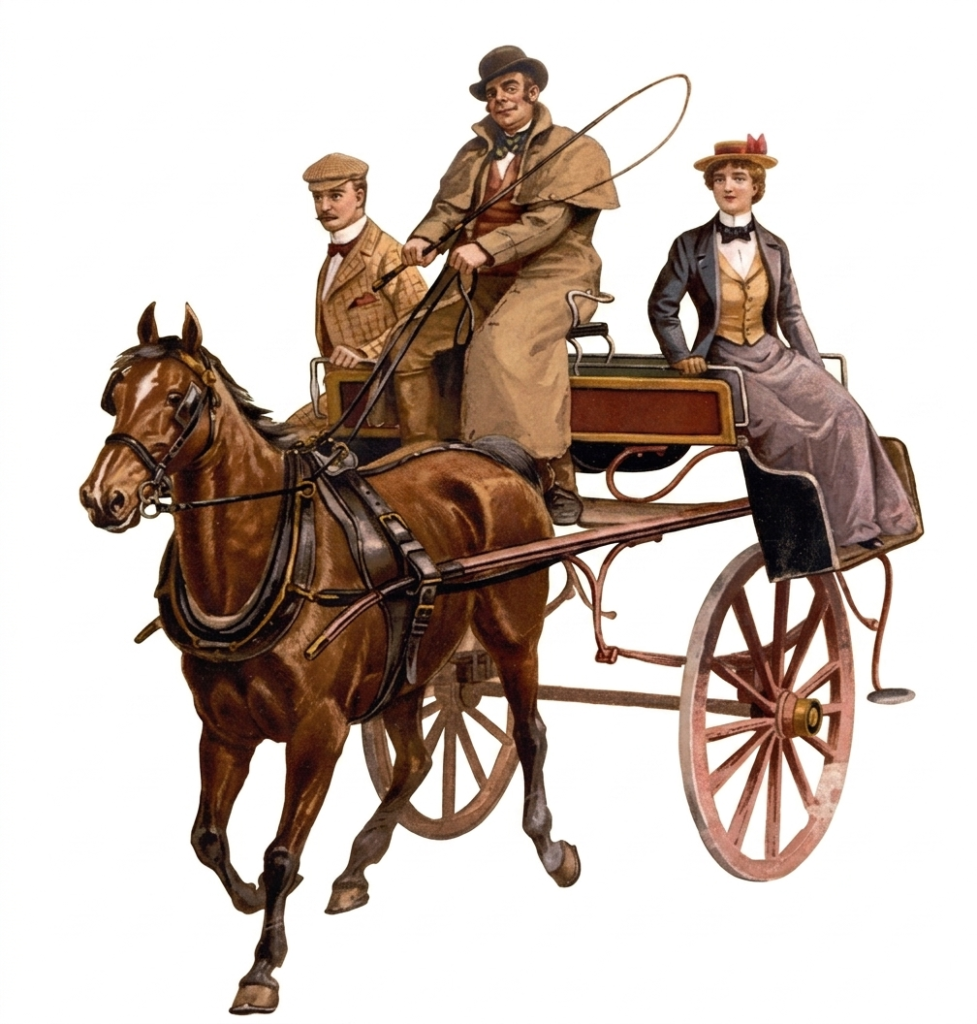
Before the hum of motors and the rush of asphalt, land travel was a symphony of rhythmic hoofbeats and creaking wood.
For millennia, the pace of human life was dictated by the endurance of muscle—be it the steady trek of a pack ox or the thundering gallop of a messenger’s horse. To move across the earth meant navigating rutted trails in horse-drawn carriages or simple carts, where the wind and the terrain were the only “fuel” considerations. It was a world of slow, organic motion, unaware that it stood on the brink of a mechanical revolution. The maximum distance per day for a horse and cart was around 15 miles.
### Electric Beginnings - The Tinkering Pioneers (1820s – 1880s)
1820s – 1880s
This era of organic endurance met its first challenger not with a roar, but with a silent, invisible spark.
1828
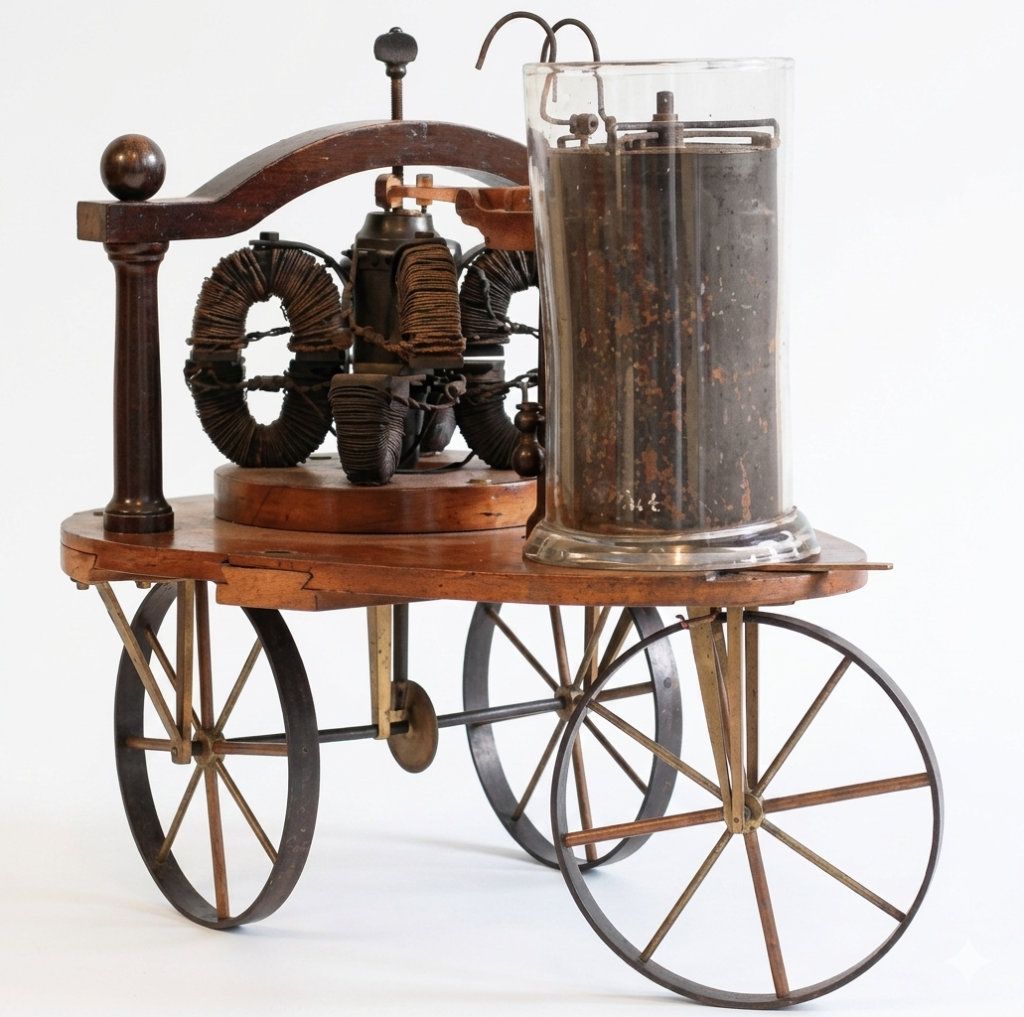
The very seeds of electric propulsion were sown by 19th-century inventors who were essentially trying to “electrify” the horse and carriage.
Around 1828, a Hungarian priest named **Ányos Jedlik** created the first rudimentary electric motor and applied it to a small model car. While it wasn’t carrying any passengers, it proved the concept was possible.
1830s
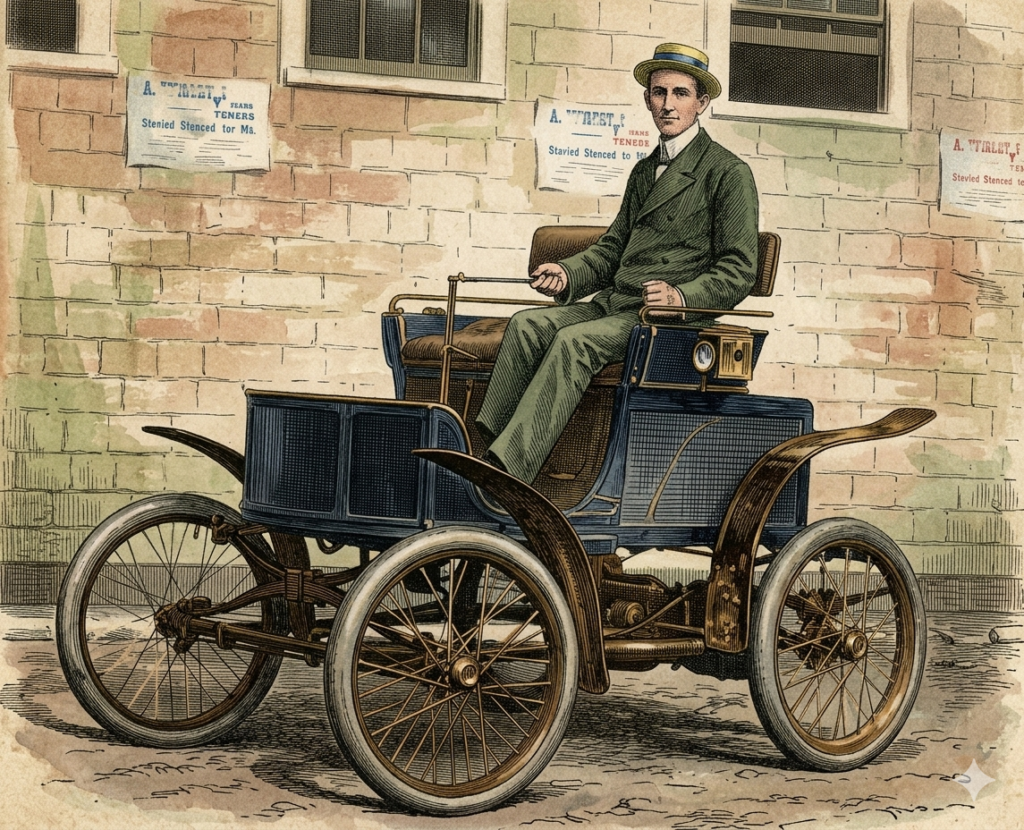
By the 1830s (roughly between 1832 and 1839), a Scottish inventor named Robert Anderson made history by constructing what is widely considered the world’s first full-scale electric carriage.
Unlike the sophisticated lithium-ion packs of today, Anderson’s crude vehicle was powered by non-rechargeable galvanic cells—heavy, primitive batteries that relied on the chemical reaction of crude metals and acids.
These cells were “primary batteries,” meaning the energy was a one-way street; once the chemical components were depleted, you essentially had to swap out the entire expensive, leaking power source or replace the spent chemicals manually.
These “horseless” pioneers were radically ahead of their time, yet they were physically tethered to a technology in its infancy. With a likely top speed no faster than a brisk walking pace—roughly 3 to 5 mph—and a range severely limited by the massive weight of the batteries compared to their meager energy output, these carriages were more proof-of-concept than practical transport.
Most of these early prototypes could only travel a few miles before their power died as quickly as it was born. Yet, by successfully moving a carriage without the aid of a horse or a steam boiler, but Anderson had proved that wheels could turn by electricity alone, setting a century-long fuse that would eventually ignite the modern EV revolution
1837
These early machines were technical marvels but economic nightmares.
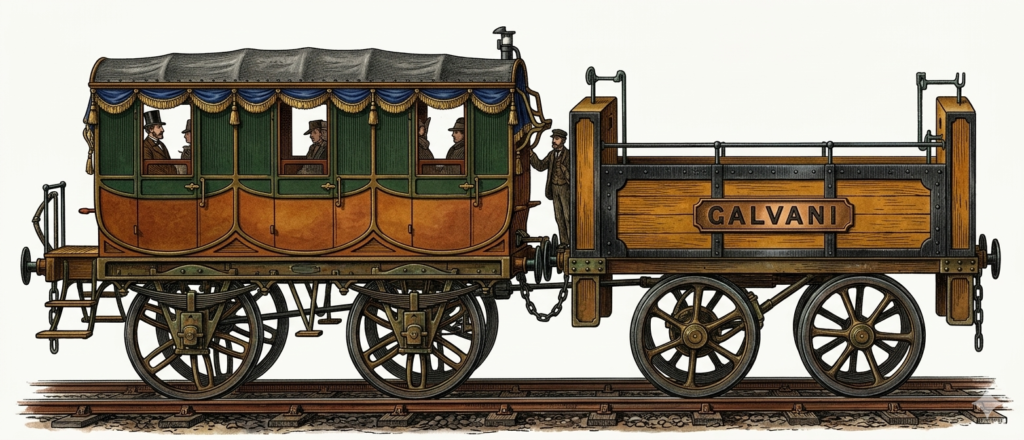
Scottish inventor Robert Davidson developed the Galvani, a 16-foot electric locomotive powered by zinc-acid primary cells. In 1842, it successfully hauled a 6-ton load at 4 mph for a 1.5-mile range on the Edinburgh and Glasgow Railway.
Despite its technical promise, the prototype was short-lived:
The Technology: It used primitive electromagnetic motors that acted on iron bolts attached to the axles.
The Sabotage: Fearing the new technology would render their steam-maintenance skills obsolete, jealous railway workers destroyed the engine while it was in storage.
### Electric Vehicle Turning Point
1859
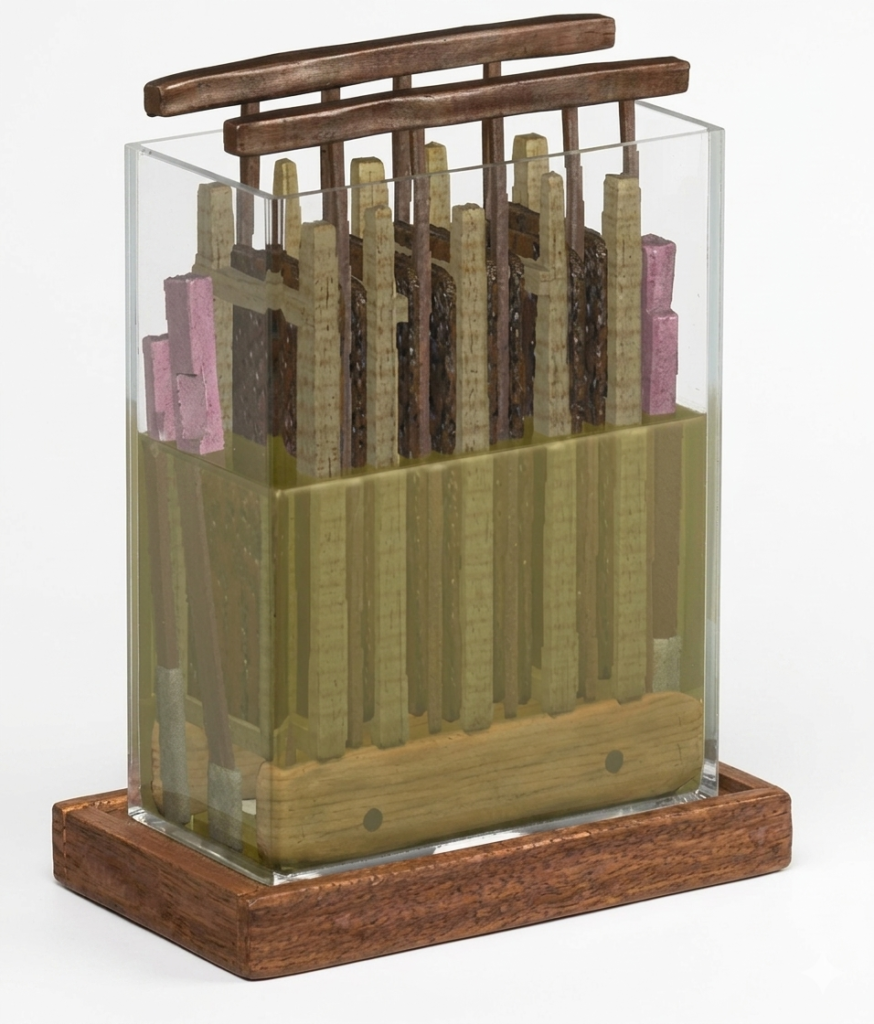
The real “spark” for the industry came in 1859 when Gaston Planté invented the rechargeable lead-acid battery. By allowing electricity to be stored and replenished, he transformed a scientific toy into a viable machine.
The specs;
- Capacity: Early versions were modest, often delivering around 0.5 kWh to 1 kWh—just enough to power primitive carriages for short distances.
- Charging: Without modern electronics, “refilling” the cells was a slow chemical process, typically requiring 8 to 12 hours to reach a full state of charge.
- Innovation: It utilized lead sheets in sulfuric acid, producing roughly 2V per cell.
This breakthrough meant vehicles could finally be “refueled” rather than discarded.
Remarkably, Planté’s chemistry remains the global standard for car starter batteries today.
1881
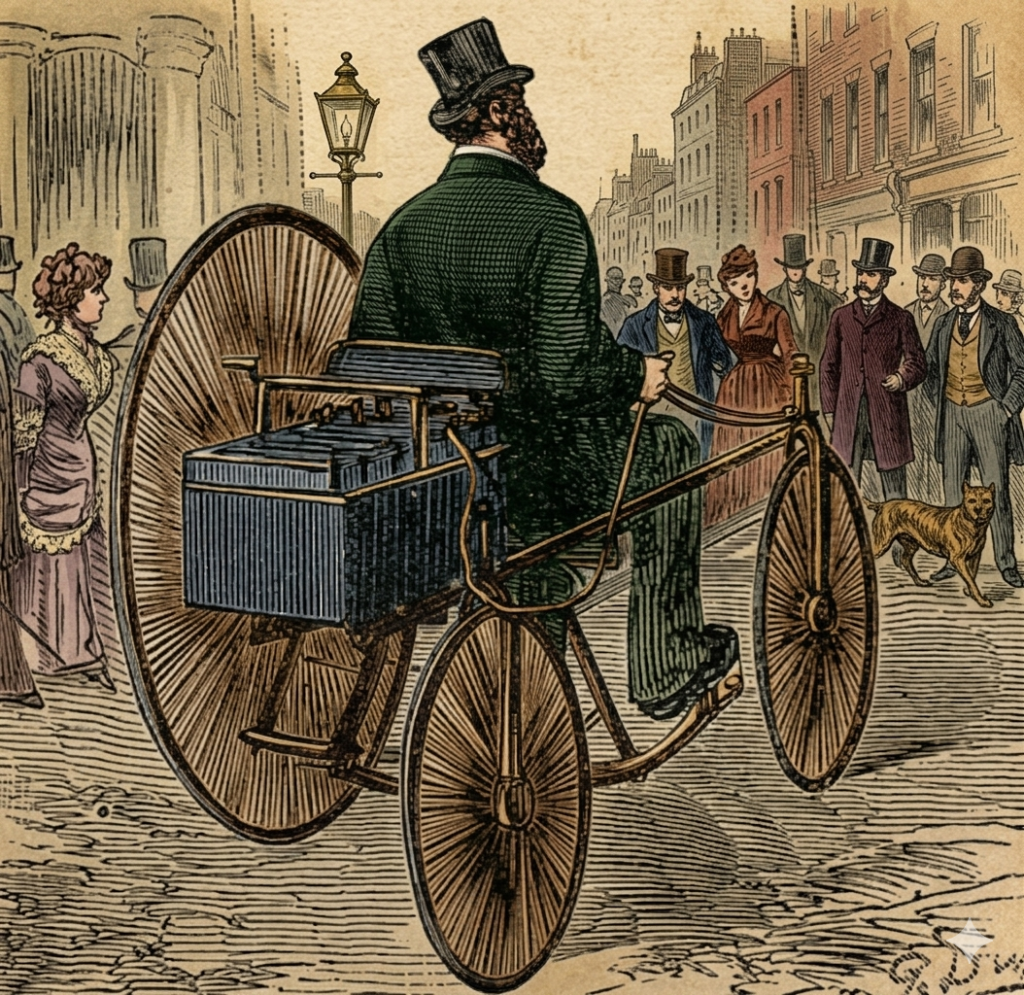
In 1881, Gustave Trouvé debuted the first functional, rechargeable electric vehicle on the streets of Paris. This pioneering three-wheeled tricycle was powered by a modest 12V lead-acid battery with a capacity of approximately 0.12 kWh.
While revolutionary for the nineteenth century, its performance was humble by modern standards: it offered a range of roughly 10 miles (16 km) on a single charge. Trouvé’s invention effectively demonstrated the potential of electric mobility, predating the internal combustion engine’s dominance and laying the groundwork for the future of sustainable transportation.
1888
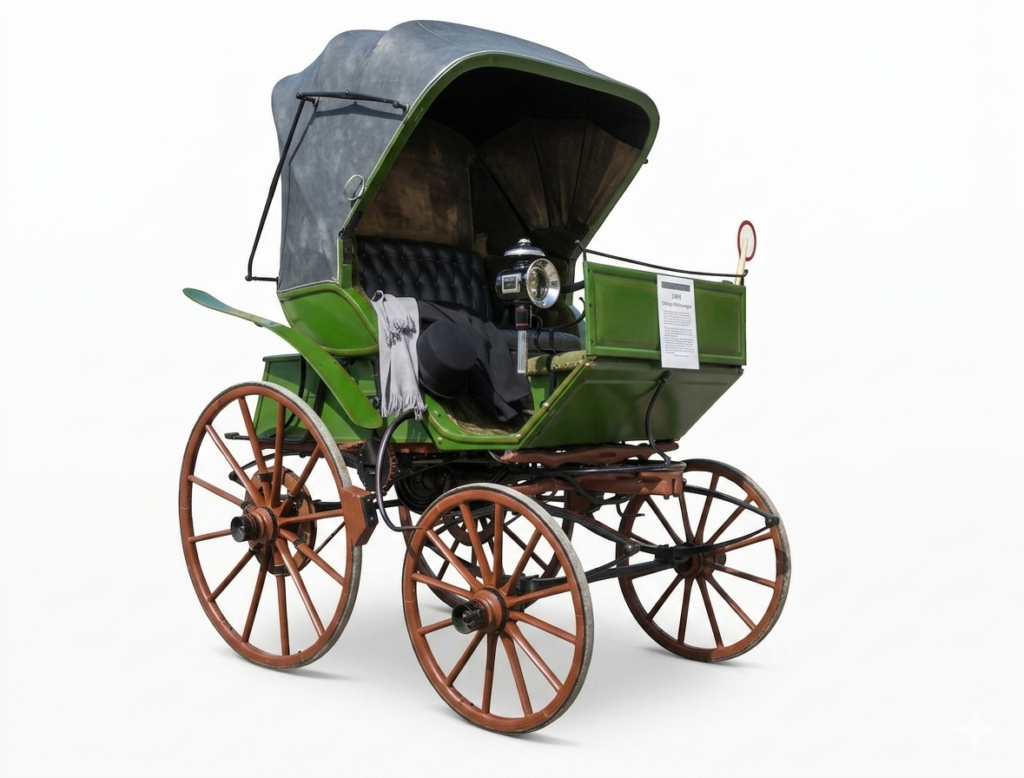
In 1888, German inventor Andreas Flocken unveiled the Flocken Elektrowagen, widely recognized as the world’s first four-wheeled electric passenger car. This “electric chaise” was powered by a 100 Ah lead-acid battery (roughly 2 kWh) and could reach a top speed of 9 mph (15 km/h).
Designed for urban mobility, it offered a range of approximately 25 miles (40 km) per charge. By moving away from the tricycle format, Flocken’s design established the four-wheel blueprint that would define the automotive industry for over a century.
### Electric Golden Age: When Electrics Were King (1890 – 1915)
1890 – 1915
By the early 1900s, electric vehicles like the Detroit Electric became the premier choice for the urban elite. While gasoline cars were loud and required arduous hand-cranking, these “silent” cars started instantly. Clara Ford famously preferred her Detroit Electric, which boasted an impressive range of 80 miles (130 km)—though some tests reached 200 miles—powered by a massive lead-acid or Edison nickel-iron battery (approx. 15–20 kWh).
Reliable and elegant, these vehicles dominated the luxury market until the electric starter eventually leveled the playing field for gasoline engines.
Key models of this era included:
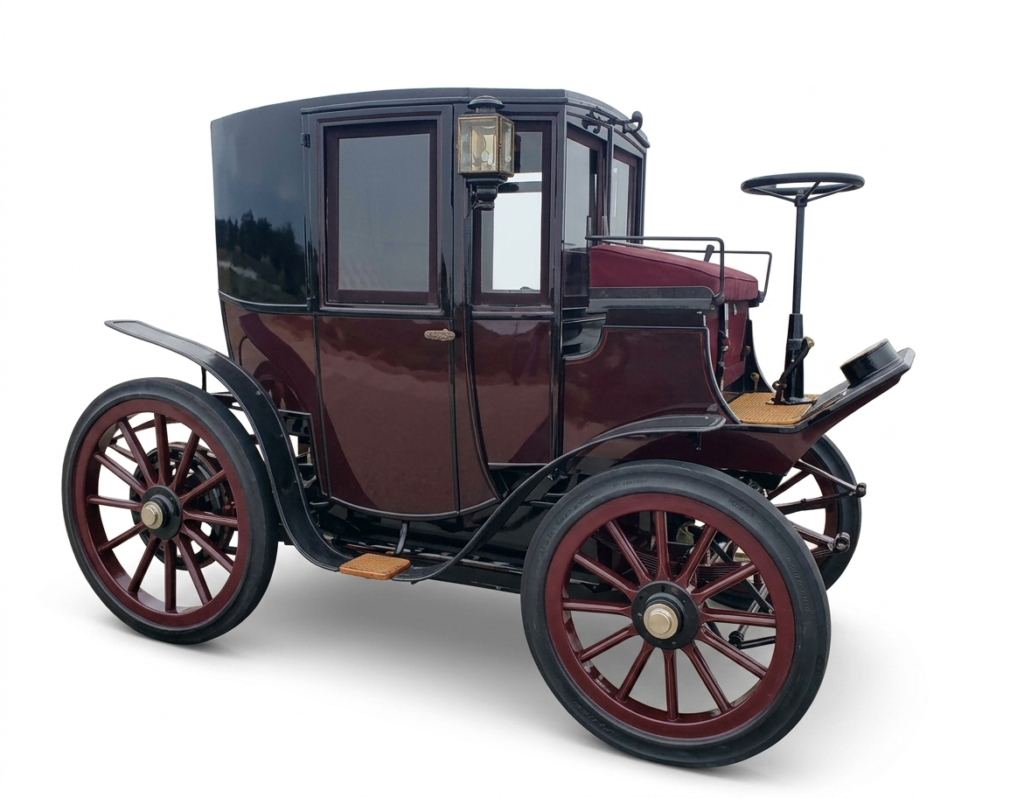
1890
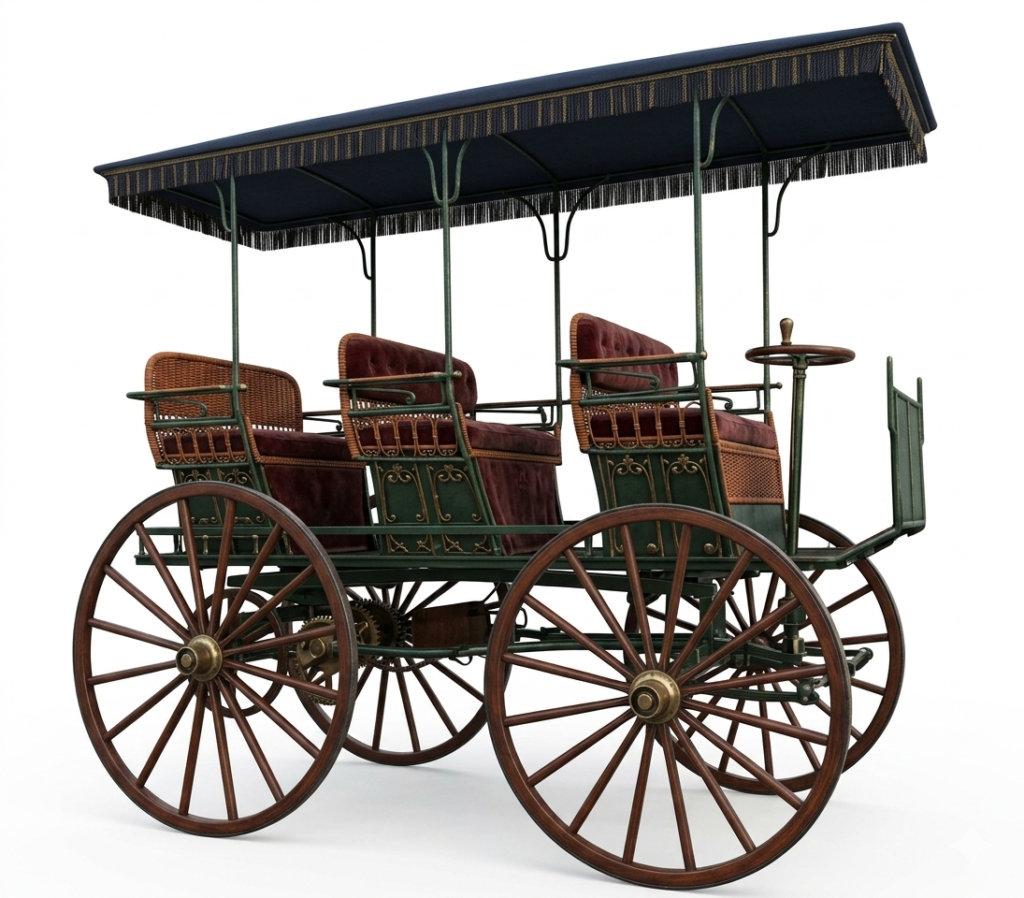
Built by William Morrison in Des Moines, Iowa, the Morrison Wagon was the first successful American electric automobile. This six-passenger carriage featured a top speed of 14 mph (23 km/h) and was powered by a massive bank of 24 storage cells located under the seats, providing a battery capacity of roughly 4 kWh.
The wagon boasted a functional range of 50 miles (80 km) per charge, sparking a wave of interest across the U.S. and proving that electric propulsion was a viable, powerful alternative to horse-drawn transport for large groups.
1897
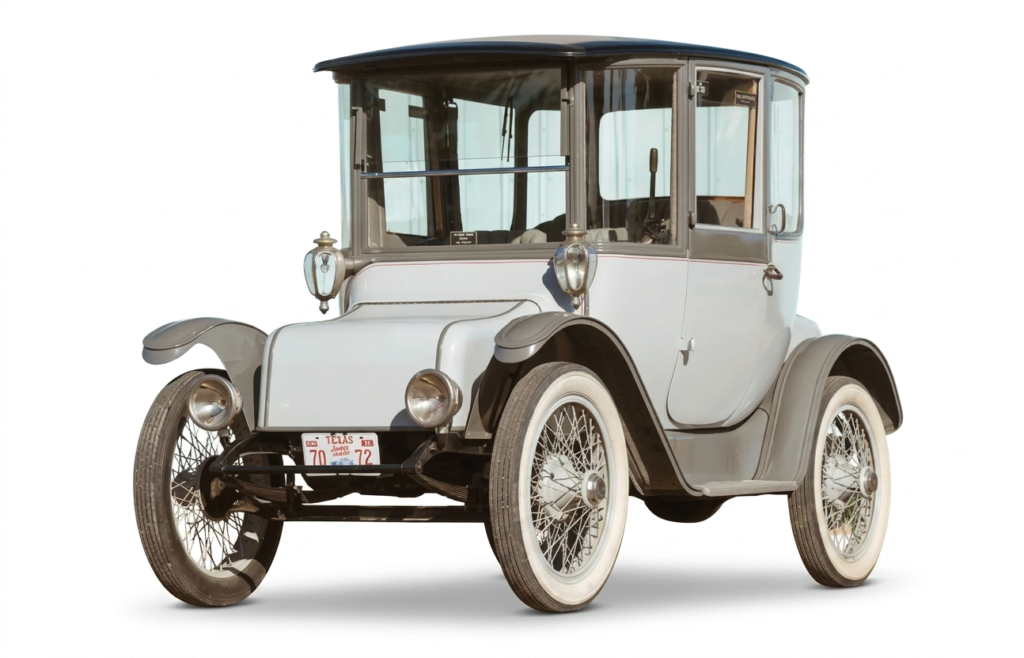
The Columbia Mk III Brougham was the backbone of New York City’s first electric taxi fleet. To achieve a range of 25 miles (40 km), it carried a staggering 1,672 lbs (758 kg) of lead-acid batteries, totaling approximately 10–12 kWh.
Meanwhile, the Detroit Electric Model 47 became the era’s gold standard. With over 13,000 units produced, it featured a 15–20 kWh battery (using Edison’s nickel-iron cells) that delivered a 80-mile (129 km) range. This performance remains respectable for modern urban commuting, cementing its legacy as a pinnacle of early EV engineering.
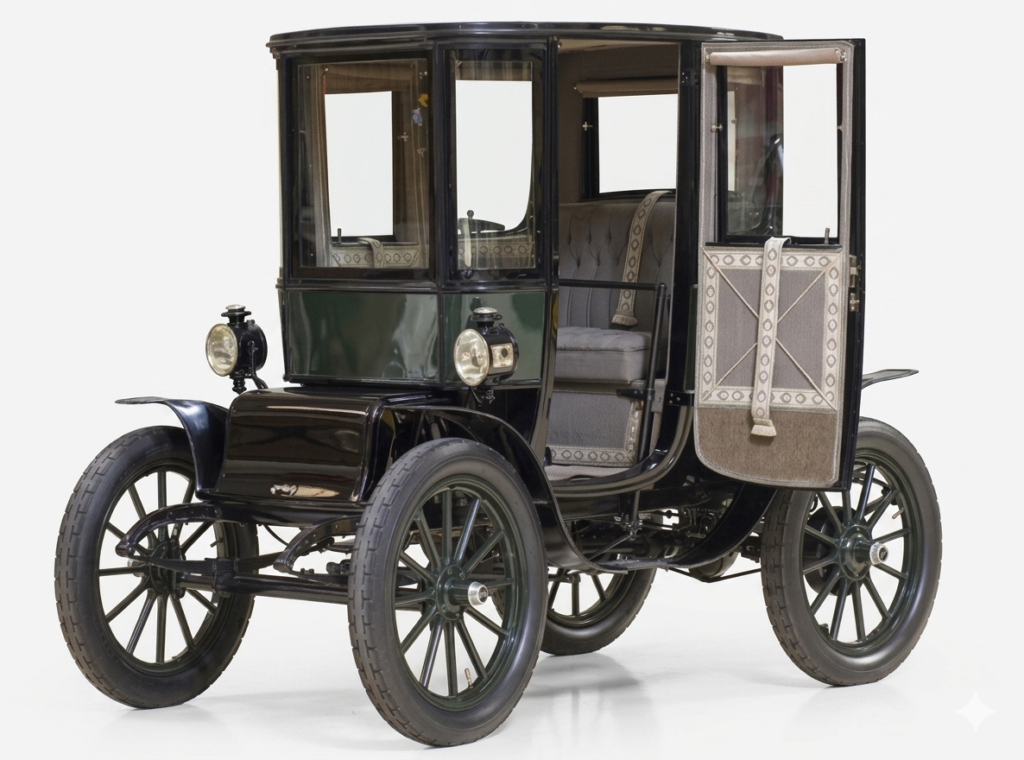
1899
The Baker Electric established Walter Baker as the world’s leading EV manufacturer by 1906. From the affordable Runabout ($850) to the prestigious Landolet ($4,000), these vehicles were prized for their reliability—even earning Thomas Edison’s endorsement.
These cars were typically equipped with a 12-cell or 24-cell battery bank (approx. 8–12 kWh), providing a range of 50 miles (80 km) at speeds up to 20 mph (32 km/h). Later models, utilizing Edison’s nickel-iron batteries, could achieve nearly 80–100 miles (129–160 km), making them the ultimate luxury status symbol of the era.
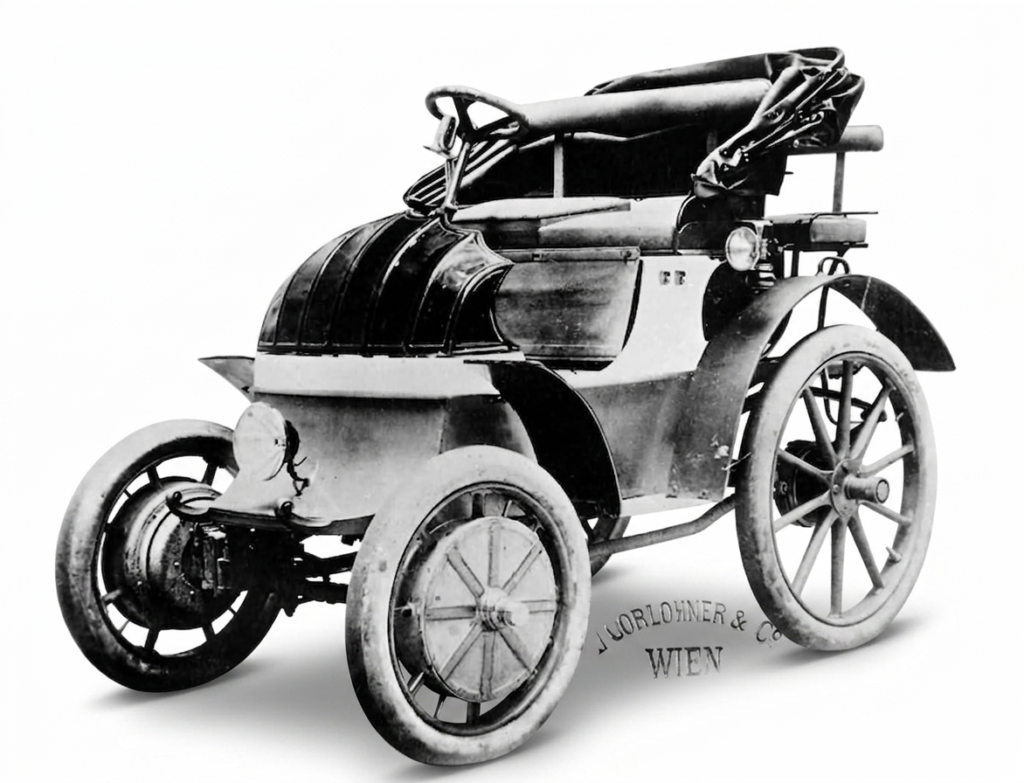
* **Lohner-Porsche (1900):** A young Ferdinand Porsche designed this marvel with **hub motors in the wheels**, a design feature used in some modern EVs.
### Electric Starter – Giving Petrol Cars the Edge (1912)
1912
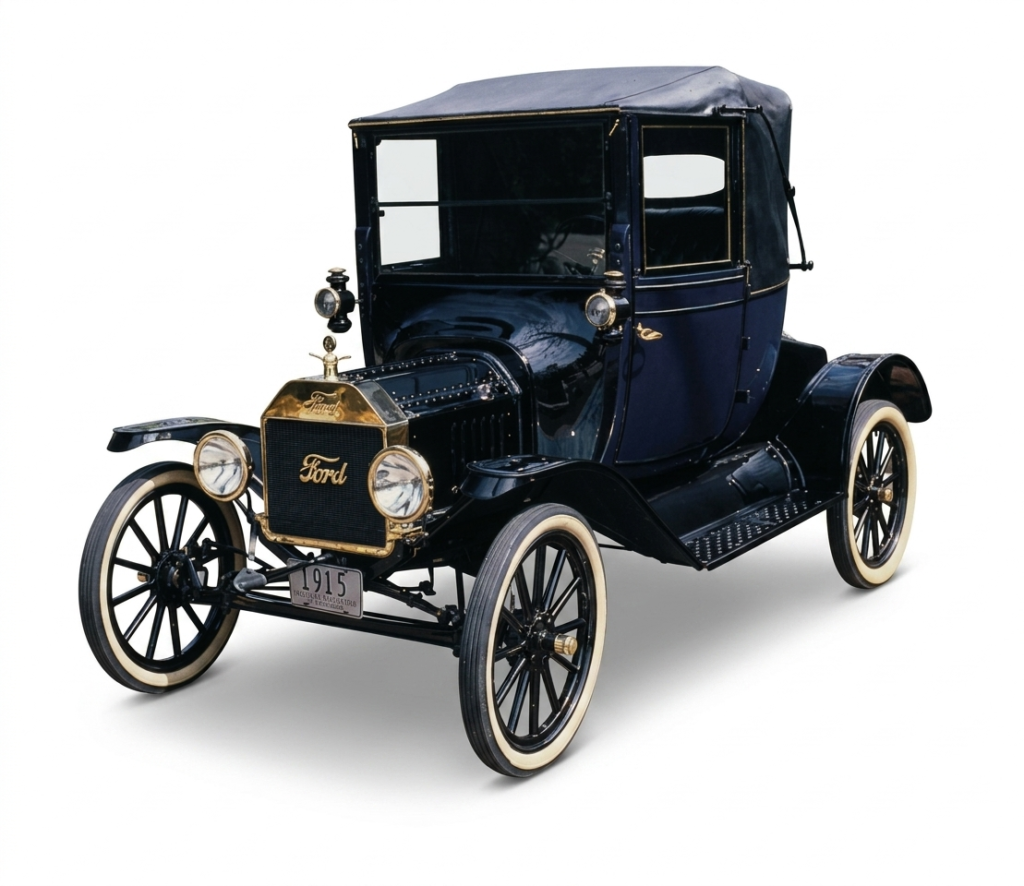
By 1912, the EV’s dominance collapsed due to two pivotal shifts. Charles Kettering’s electric starter eliminated the danger of hand-cranking, while Henry Ford’s assembly line slashed the Model T’s price to under $300. In contrast, a luxurious EV cost nearly $3,000.
Electric cars of this era typically utilized 15–20 kWh battery packs, offering a range of 80 miles (129 km). However, the rapidly expanding highway system and cheap gasoline made the EV’s limited range and high cost untenable. By the 1920s, the “Dark Age” of electric mobility began as petrol surged ahead.
### Electric Niche - Utility Era (1930s – 1960s)
1947
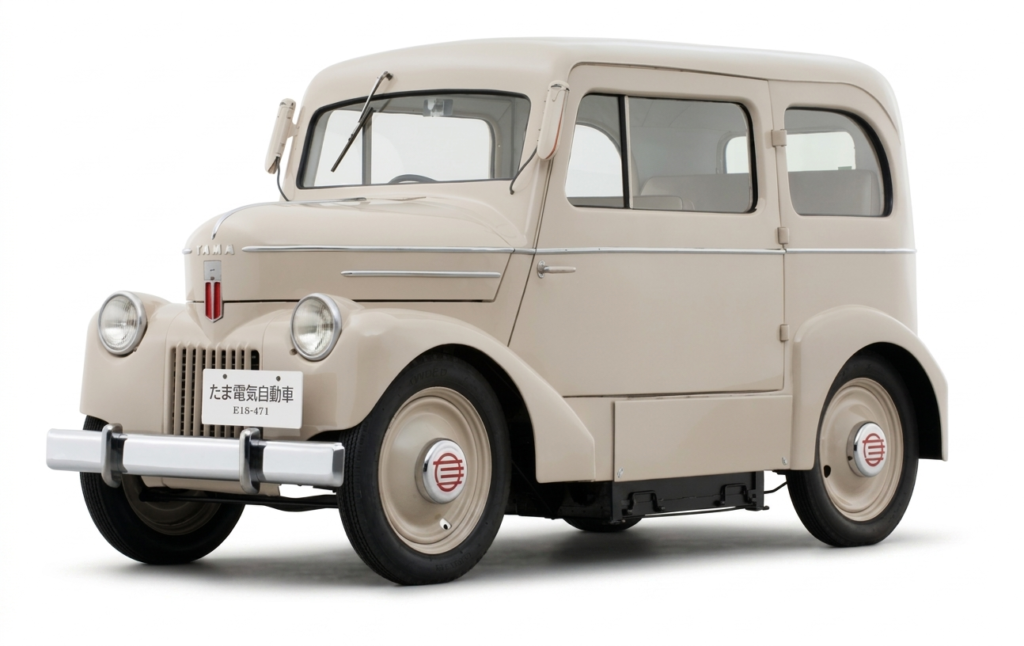
Post-WWII fuel shortages birthed the TAMA electric car (1947), powered by a 3.6 kWh lead-acid battery with a range of 40 miles (65 km). Later, the Henney Kilowatt (1959) debuted using a Renault Dauphine chassis.
The Kilowatt featured a 72V system (approx. 12 kWh), reaching 60 mph (97 km/h) with a range of 60 miles (97 km). Despite its capability, its high price tag—double that of gasoline competitors—limited production to just 100 units, leaving it a rare relic of a brief electric resurgence.
1960s Uk.
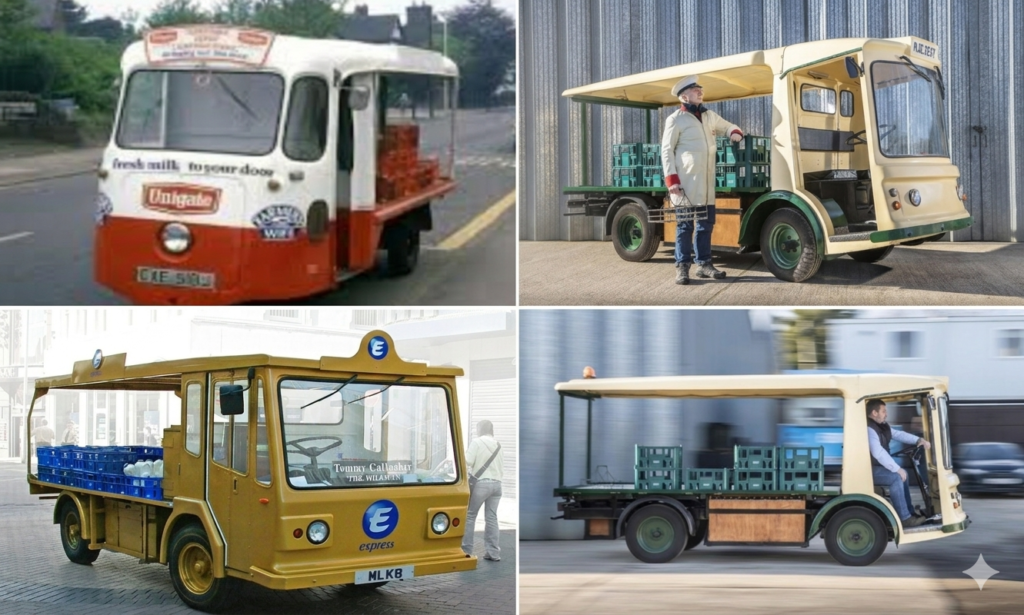
While EVs vanished from highways, they dominated local delivery. In the UK, the “Milk Float” became a national icon from the 1960s to the 1980s. Manufacturers like Smith’s and Morrison-Electricars built thousands of these near-silent workhorses, perfectly suited for stop-start urban routes.
These floats typically carried massive 72V or 80V lead-acid batteries with capacities around 25–30 kWh. Because of their heavy loads and low top speeds (approx. 15 mph), they offered a practical delivery range of 30–40 miles (48–64 km), proving that electric power remained the most efficient choice for specialized industry.
### Electric - The Oil Crisis Renaissance (1970s)
1973
The oil crises of 1973 and 1979 reminded the world that being hooked on gas was a risky business. Several small startups tried to fill the gap with quirky, wedge-shaped commuters.
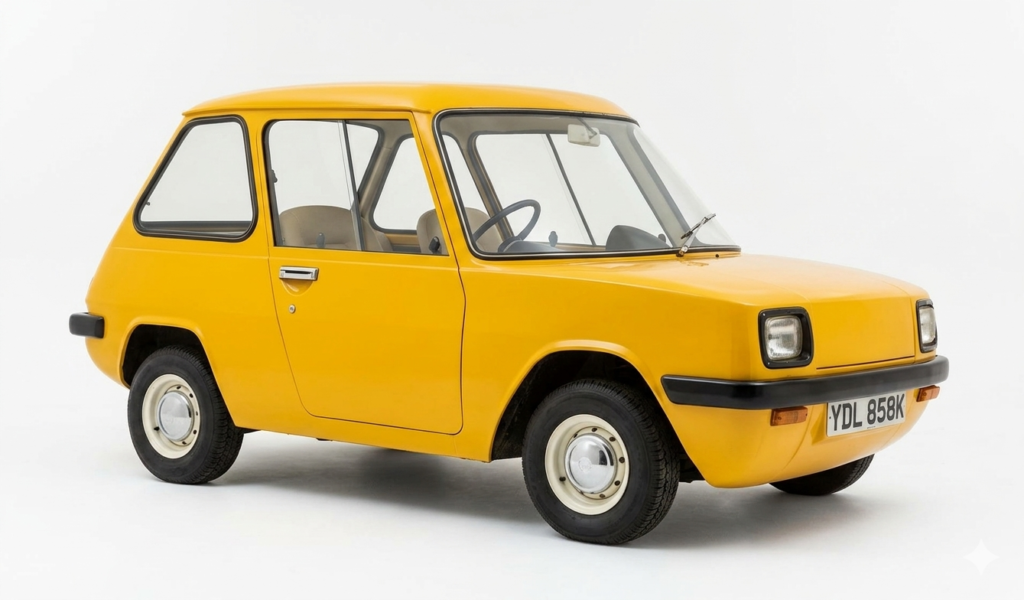
The Enfield 8000 (1973) was a sophisticated British response to the 1970s oil crisis. Featuring a lightweight aluminum body and a 8 hp electric motor, it was powered by a 48V lead-acid battery system with a capacity of approximately 9.6 kWh.
This setup provided a top speed of 48 mph (77 km/h) and a respectable range of 40 miles (64 km). While technically superior to many contemporaries, its high manufacturing costs relegated it to utility fleets, with only 120 units produced. It remains a cult classic for its advanced “city car” design.
1974
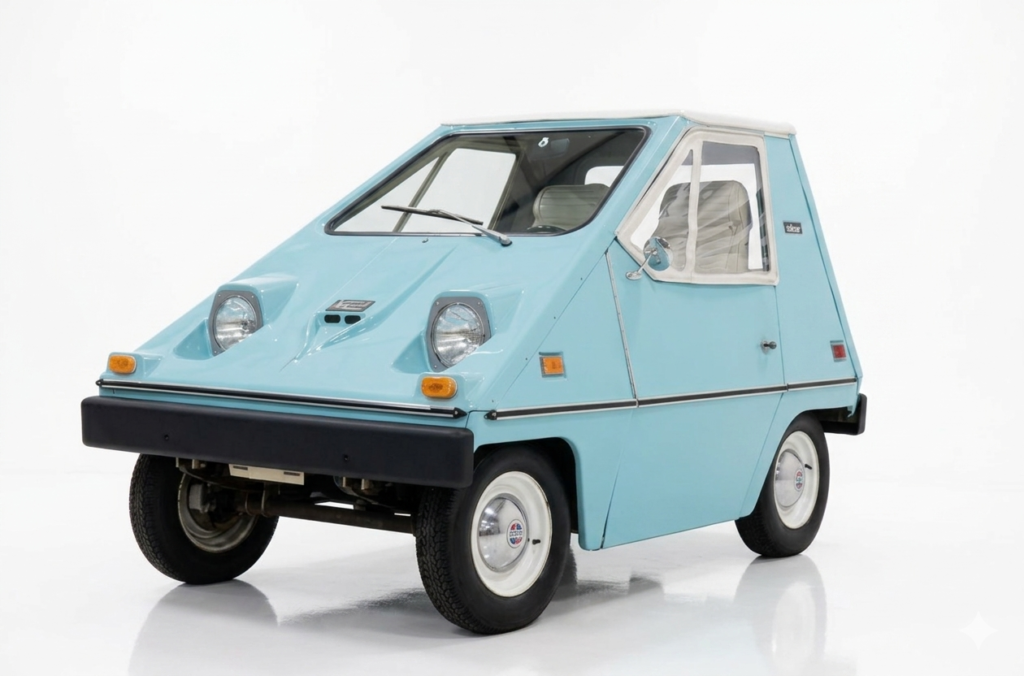
The wedge-shaped Sebring-Vanguard CitiCar (1974) remains a post-war icon, with over 4,400 units produced. Despite its “painfully underpowered” 3.5 hp motor and plastic body, it offered an affordable $2,988 price point during the oil crisis.
Powered by a 36V or 48V lead-acid battery pack (roughly 5–6 kWh), the CitiCar reached a top speed of 30–38 mph (48–61 km/h). It provided a modest range of 40 miles (64 km), serving as a functional, if quirky, solution for short urban commutes decades before the modern EV revolution.
### Electric Flop – Uk Sinclair C5 (1985)
1985
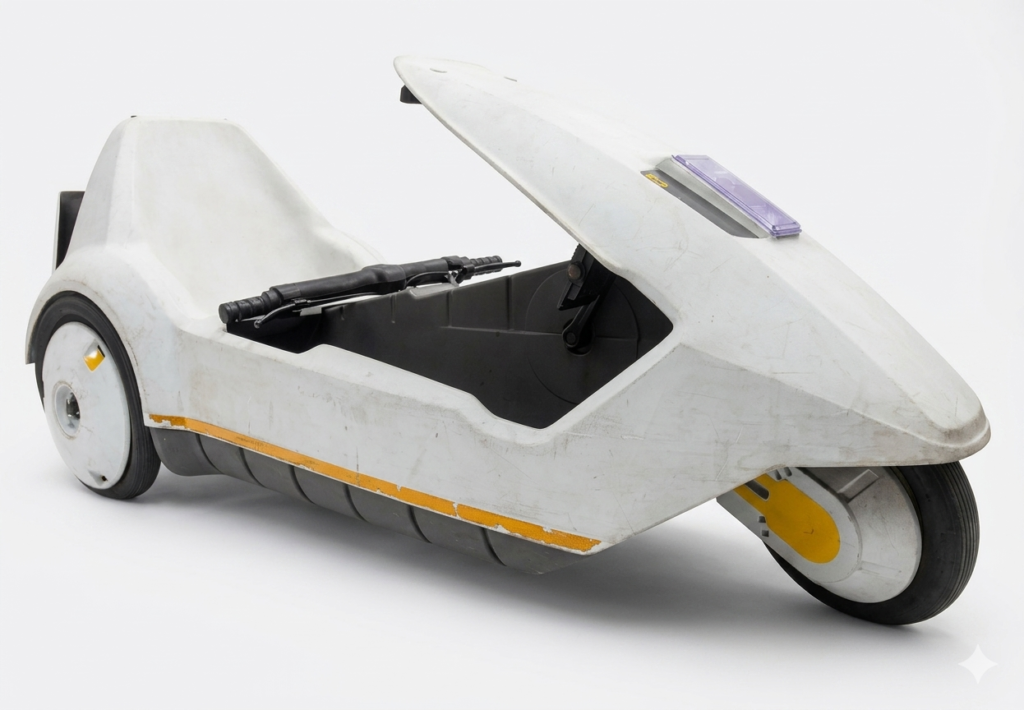
Launched in 1985, the Sinclair C5 was Sir Clive Sinclair’s ambitious attempt to solve urban congestion. This recumbent electric tricycle used a 12V lead-acid battery with a capacity of approximately 0.36 kWh, driving a motor that produced just 0.34 hp.
The C5 offered a range of 20 miles (32 km) and a top speed of 15 mph (24 km/h). However, it became a commercial failure due to its exposure to traffic and weather, along with a motor prone to overheating on hills. Despite its flaws, it remains a cult icon of early micro mobility.
### Electric -The Compliance Era (1990s – 2003)
The 1990s marked the most significant technological leap before Tesla, largely forced by the **California Air Resources Board (CARB) mandate**, which required automakers to sell zero-emission vehicles to keep their business in California. This “Compliance Era” produced some of the most beloved and controversial cars in history.
1996
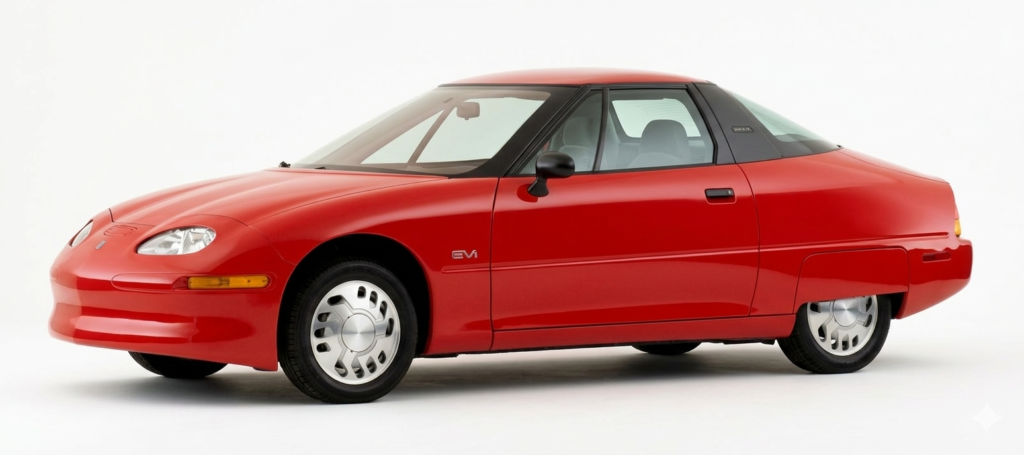
The General Motors EV1 (1996) was a modern technical masterpiece, boasting a record-breaking 0.19 drag coefficient. The first generation utilized an 18.7 kWh lead-acid battery with a 70-mile (113 km) range.
The second generation upgraded to a 26.4 kWh Nickel-Metal Hydride (NiMH) battery, extending the range to an impressive 140 miles (225 km). Despite its popularity and 1,117 units produced, GM infamously recalled and crushed the fleet in 2003. This controversial move ended the EV1’s legacy prematurely and inspired the documentary “Who Killed the Electric Car?”, highlighting the industry’s early resistance to electric propulsion.
1997
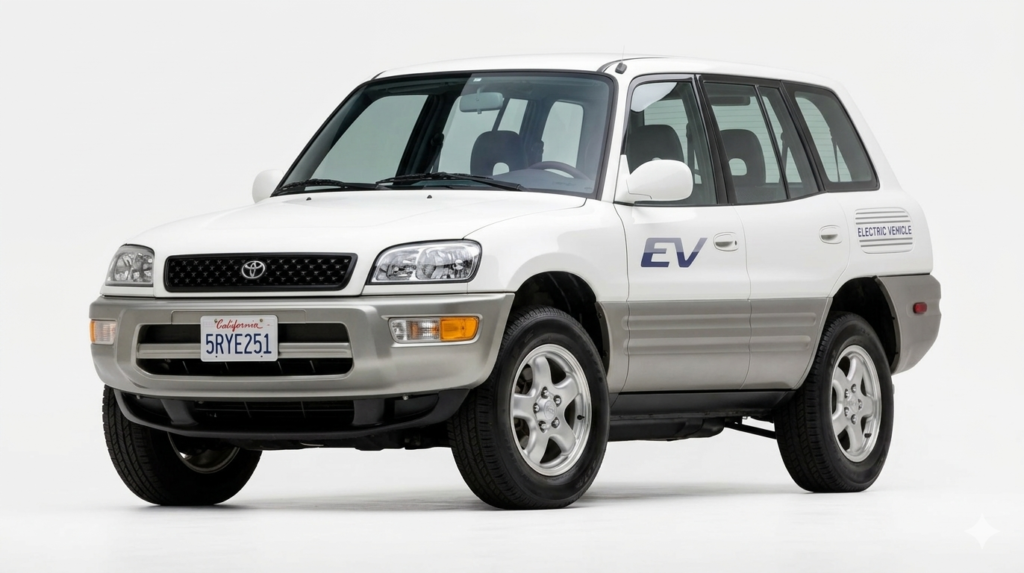
The Toyota RAV4 EV (1997) proved that electric power could be practical for families, not just commuters. It featured a 27.4 kWh Nickel-Metal Hydride (NiMH) battery pack, which became legendary for its longevity; many original packs exceeded 150,000 miles.
This electric SUV delivered a top speed of 78 mph (126 km/h) and a real-world range of approximately 95 miles (153 km). Although Toyota only sold 328 units to the public before terminating the program in 2003, the RAV4 EV remains a cult classic and a testament to the early durability of NiMH technology.
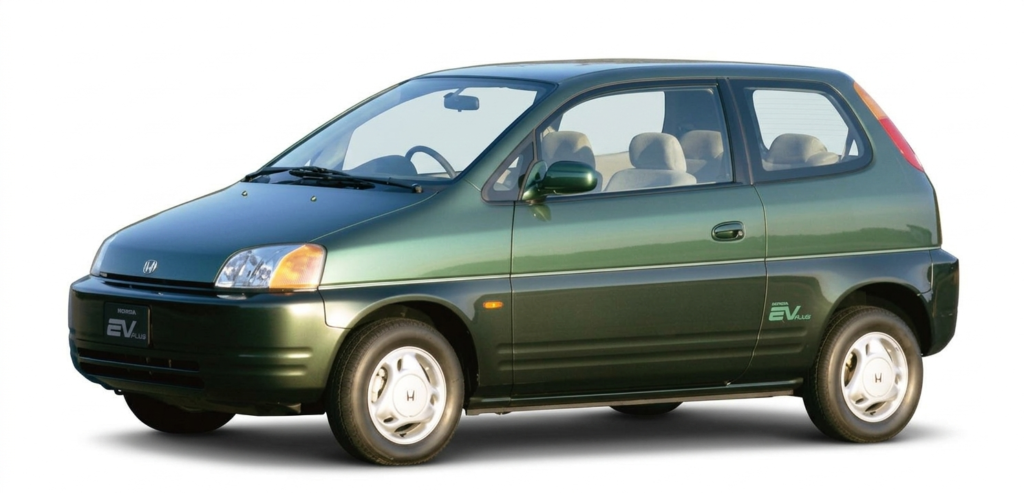
The Honda EV Plus (1997) was a milestone in battery technology, being the first EV from a major manufacturer to entirely abandon lead-acid in favor of Nickel-Metal Hydride (NiMH). It utilized a 28.7 kWh battery pack that powered its front-wheel-drive motor.
The EV Plus achieved a top speed of 80 mph (129 km/h) and offered a range of 80–100 miles (130–160 km). Although Honda only produced about 300 units for exclusive lease programs, the vehicle proved that advanced battery chemistry could provide the range and reliability necessary for modern urban life.
1998
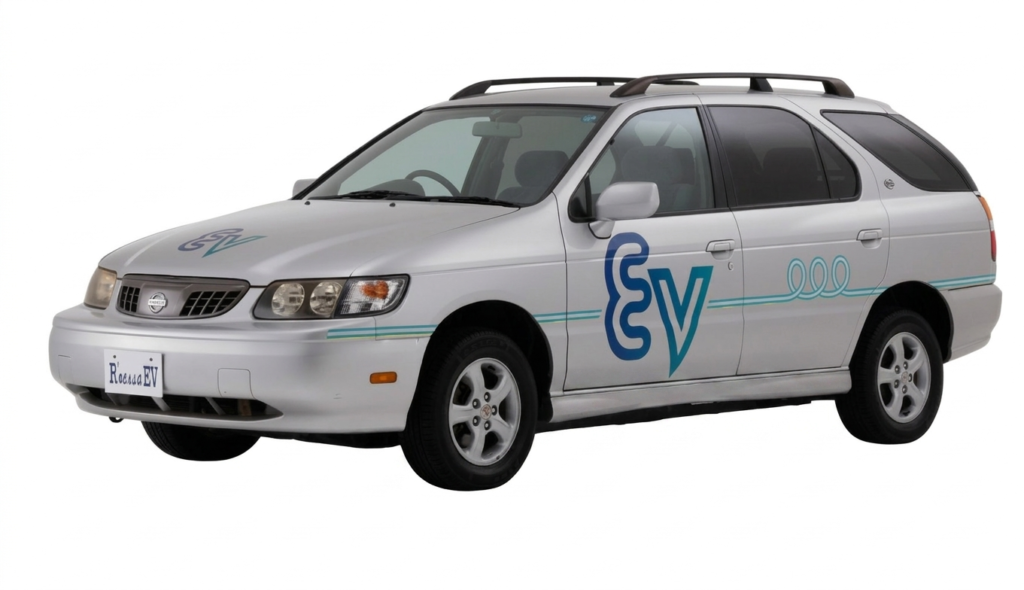
The Nissan Altra EV (1998) was a high-tech pioneer, making history as the first production EV to utilize Lithium-ion (Li-ion) batteries. This shift away from nickel-metal hydride provided superior energy density, utilizing a ~32 kWh battery pack that would eventually set the blueprint for modern EVs like the Tesla Model S.
The Altra EV delivered a range of 120 miles (193 km) and a top speed of 75 mph (120 km/h). With only about 200 units produced for utility fleets and leasing, it remains a rare but critical ancestor of today’s high-performance electric vehicles.
1997
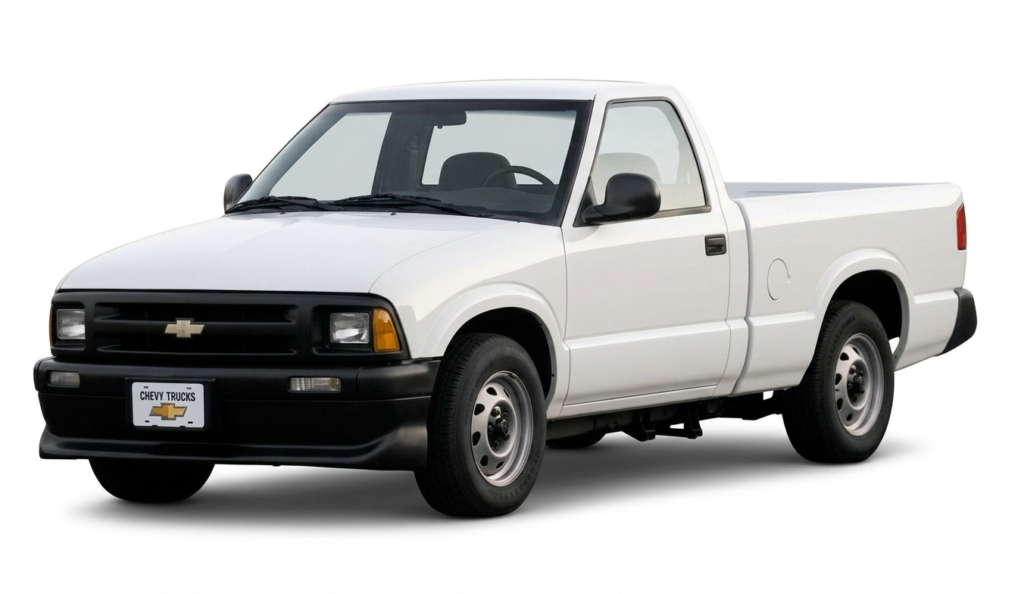
In the late 1990s, the Chevrolet S-10 EV and Ford Ranger EV brought electric power to the light truck market. The S-10 EV utilized a 16.2 kWh lead-acid (later 29 kWh NiMH) battery, offering a range of up to 90 miles (145 km).
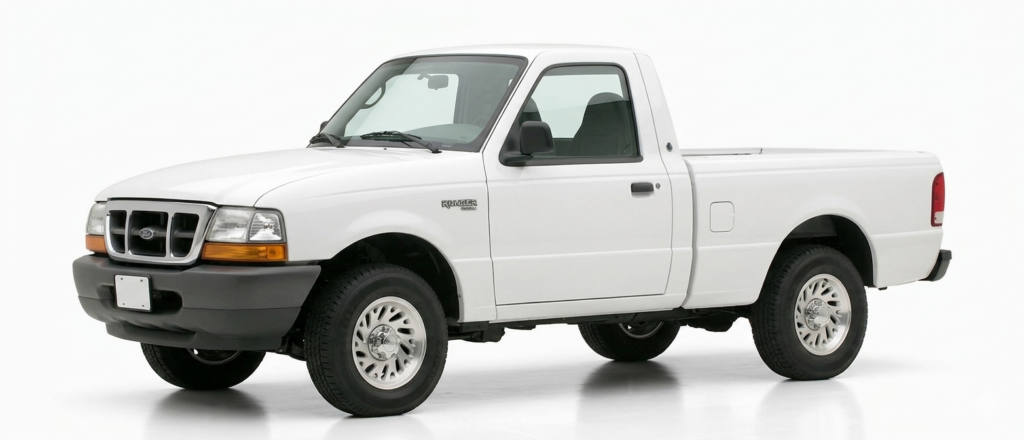
The Ford Ranger EV became the standout, with 1,500 units produced. It featured a 26 kWh NiMH battery (initially lead-acid), providing a 65-mile (105 km) range and a top speed of 75 mph (121 km/h). These pickups proved that electric drivetrains could handle utility work, though high costs initially limited their reach.
1998
In the late 1990s, the Chevrolet S-10 EV and Ford Ranger EV brought electric power to the light truck market. The S-10 EV utilized a 16.2 kWh lead-acid (later 29 kWh NiMH) battery, offering a range of up to 90 miles (145 km).
The Ford Ranger EV became the standout, with 1,500 units produced. It featured a 26 kWh NiMH battery (initially lead-acid), providing a 65-mile (105 km) range and a top speed of 75 mph (121 km/h). These pickups proved that electric drivetrains could handle utility work, though high costs initially limited their reach.
### Electric Vehicles - The Handover to Tesla (2008 -onwards)
2008
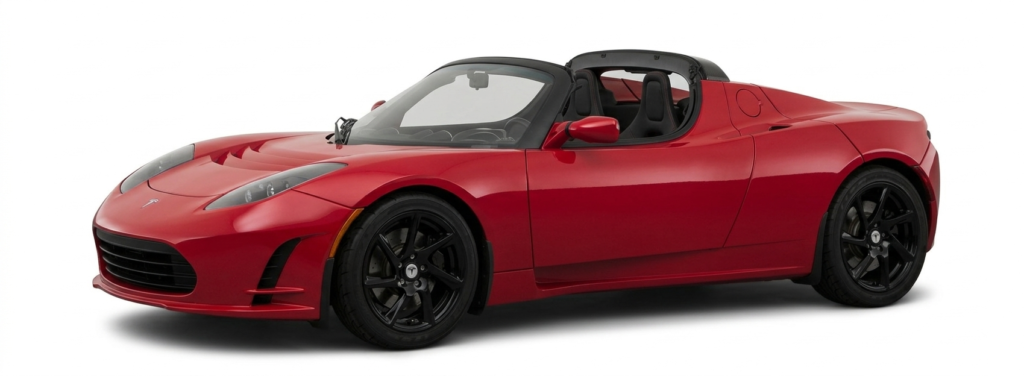
The Tesla Roadster (2008) revolutionized the industry by combining high-performance styling with the Lithium-ion technology pioneered by the Nissan Altra. It was the first production EV to exceed a 200-mile (320 km) range, officially clocking in at 244 miles (393 km).
This feat was achieved using a massive 53 kWh battery pack composed of 6,831 individual laptop-style cells. With a 0–60 mph time of just 3.7 seconds, the Roadster shattered the “slow golf cart” stereotype, proving that electric cars could be both practical for long distances and thrilling to drive.
2012
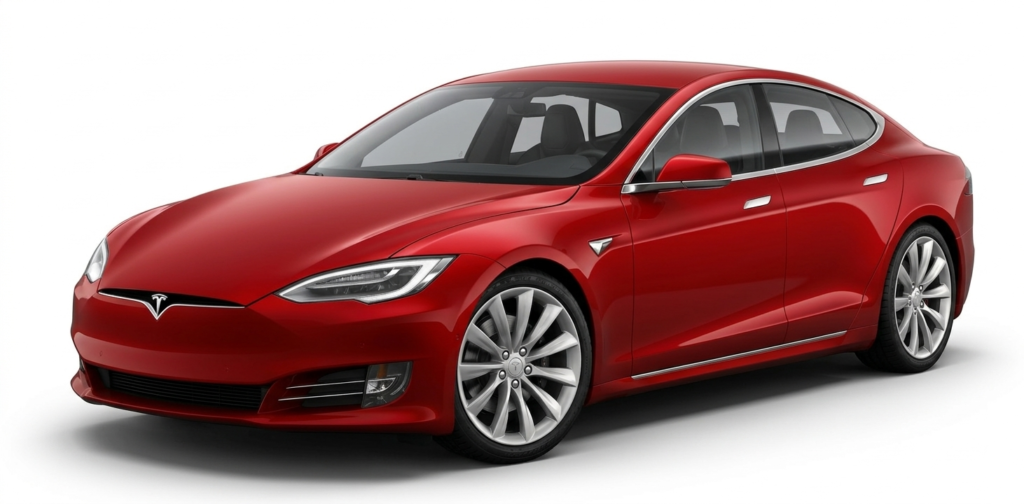
The Tesla Model S (2012) redefined the EV, pairing sleek luxury with a massive 85 kWh lithium-ion battery. It delivered a groundbreaking 265-mile (426 km) range and “Ludicrous” performance, proving electric cars could outperform luxury petrol rivals.
Tesla didn’t invent the EV; they refined a century of persistent, often suppressed innovation—from Trouvé’s 1881 tricycle to the Li-ion breakthroughs of the 1990s. With battery capacities now exceeding 100 kWh and ranges topping 400 miles (644 km), the industry has finally moved beyond the “Dark Age,” entering a new era of global sustainable mobility.
2026 onwards
The Tesla Model S (2012) was the final nail in the coffin for the “golf cart” stigma, pairing sleek luxury with a massive 85 kWh lithium-ion battery. It delivered a groundbreaking 265-mile (426 km) range and blistering performance, proving electric cars could easily outclass their luxury petrol rivals.
As Smartgrandad sees it, Tesla didn’t just invent a car; they resurrected a century of persistent, brilliant, and often suppressed innovation. From Trouvé’s 1881 tricycle to the high-tech experiments of the 90s, the blueprint was always there.
Looking ahead, it’s clear that electric vehicles will be the preferred option for the vast majority. As battery capacities now routinely exceed 100 kWh and charging infrastructure matures, the sheer efficiency and simplicity of EVs make them the logical successor to the internal combustion engine. Soon, fossil-fueled vehicles will likely become a niche alternative—expensive, high-maintenance, much like the horse and carriage they once replaced.
Your Expert 100% Electric Vehicle (BEV) with advice from a senior perspective. No hybrids, no fossil fuels
Try Your Make, Model Finders, browse our articles; guides and be informed about the new models that are constantly being added.
I hope you enjoyed this article and please send me comments via Social Media links below.
Also, if you spot any errors, etc. please add these in your comments. Thankyou.

In this article, explore the rise, fall, and rebirth of the electric car and the one thing that made Petrol vehicles easier to own.
Discover the inventors who “electrified” the horse, the 1920s “Dark Age,” where fossil fueled vehicles where the temporary winners, and how 2 centuries of innovation paved the way for the modern EV.
Scroll through the major innovations, dive into the EVs that existed in the 18 and 1900s and see how we reached todays sophisticated EVs.
### Pre-Electric - Muscle Power Ruled (Pre 1820s)
Pre 1820s
Before the hum of motors and the rush of asphalt, land travel was a symphony of rhythmic hoofbeats and creaking wood.
For millennia, the pace of human life was dictated by the endurance of muscle—be it the steady trek of a pack ox or the thundering gallop of a messenger’s horse. To move across the earth meant navigating rutted trails in horse-drawn carriages or simple carts, where the wind and the terrain were the only “fuel” considerations. It was a world of slow, organic motion, unaware that it stood on the brink of a mechanical revolution. The maximum distance per day for a horse and cart was around 15 miles.
### Electric Beginnings - The Tinkering Pioneers (1820s – 1880s)
1820s – 1880s
This era of organic endurance met its first challenger not with a roar, but with a silent, invisible spark.
1828
The very seeds of electric propulsion were sown by 19th-century inventors who were essentially trying to “electrify” the horse and carriage.
Around 1828, a Hungarian priest named **Ányos Jedlik** created the first rudimentary electric motor and applied it to a small model car. While it wasn’t carrying any passengers, it proved the concept was possible.
1830s
By the 1830s (roughly between 1832 and 1839), a Scottish inventor named Robert Anderson made history by constructing what is widely considered the world’s first full-scale electric carriage.
Unlike the sophisticated lithium-ion packs of today, Anderson’s crude vehicle was powered by non-rechargeable galvanic cells—heavy, primitive batteries that relied on the chemical reaction of crude metals and acids.
These cells were “primary batteries,” meaning the energy was a one-way street; once the chemical components were depleted, you essentially had to swap out the entire expensive, leaking power source or replace the spent chemicals manually.
These “horseless” pioneers were radically ahead of their time, yet they were physically tethered to a technology in its infancy. With a likely top speed no faster than a brisk walking pace—roughly 3 to 5 mph—and a range severely limited by the massive weight of the batteries compared to their meager energy output, these carriages were more proof-of-concept than practical transport.
Most of these early prototypes could only travel a few miles before their power died as quickly as it was born. Yet, by successfully moving a carriage without the aid of a horse or a steam boiler, but Anderson had proved that wheels could turn by electricity alone, setting a century-long fuse that would eventually ignite the modern EV revolution
1837
These early machines were technical marvels but economic nightmares.
Scottish inventor Robert Davidson developed the Galvani, a 16-foot electric locomotive powered by zinc-acid primary cells. In 1842, it successfully hauled a 6-ton load at 4 mph for a 1.5-mile range on the Edinburgh and Glasgow Railway.
Despite its technical promise, the prototype was short-lived:
The Technology: It used primitive electromagnetic motors that acted on iron bolts attached to the axles.
The Sabotage: Fearing the new technology would render their steam-maintenance skills obsolete, jealous railway workers destroyed the engine while it was in storage.
### Electric Vehicle Turning Point
1859
The real “spark” for the industry came in 1859 when Gaston Planté invented the rechargeable lead-acid battery. By allowing electricity to be stored and replenished, he transformed a scientific toy into a viable machine.
The specs;
- Capacity: Early versions were modest, often delivering around 0.5 kWh to 1 kWh—just enough to power primitive carriages for short distances.
- Charging: Without modern electronics, “refilling” the cells was a slow chemical process, typically requiring 8 to 12 hours to reach a full state of charge.
- Innovation: It utilized lead sheets in sulfuric acid, producing roughly 2V per cell.
This breakthrough meant vehicles could finally be “refueled” rather than discarded.
Remarkably, Planté’s chemistry remains the global standard for car starter batteries today.
1881
In 1881, Gustave Trouvé debuted the first functional, rechargeable electric vehicle on the streets of Paris. This pioneering three-wheeled tricycle was powered by a modest 12V lead-acid battery with a capacity of approximately 0.12 kWh.
While revolutionary for the nineteenth century, its performance was humble by modern standards: it offered a range of roughly 10 miles (16 km) on a single charge. Trouvé’s invention effectively demonstrated the potential of electric mobility, predating the internal combustion engine’s dominance and laying the groundwork for the future of sustainable transportation.
1888
In 1888, German inventor Andreas Flocken unveiled the Flocken Elektrowagen, widely recognized as the world’s first four-wheeled electric passenger car. This “electric chaise” was powered by a 100 Ah lead-acid battery (roughly 2 kWh) and could reach a top speed of 9 mph (15 km/h).
Designed for urban mobility, it offered a range of approximately 25 miles (40 km) per charge. By moving away from the tricycle format, Flocken’s design established the four-wheel blueprint that would define the automotive industry for over a century.
### Electric Golden Age: When Electrics Were King (1890 – 1915)
1890 – 1915
By the early 1900s, electric vehicles like the Detroit Electric became the premier choice for the urban elite. While gasoline cars were loud and required arduous hand-cranking, these “silent” cars started instantly. Clara Ford famously preferred her Detroit Electric, which boasted an impressive range of 80 miles (130 km)—though some tests reached 200 miles—powered by a massive lead-acid or Edison nickel-iron battery (approx. 15–20 kWh).
Reliable and elegant, these vehicles dominated the luxury market until the electric starter eventually leveled the playing field for gasoline engines.
Key models of this era included:
1890
Built by William Morrison in Des Moines, Iowa, the Morrison Wagon was the first successful American electric automobile. This six-passenger carriage featured a top speed of 14 mph (23 km/h) and was powered by a massive bank of 24 storage cells located under the seats, providing a battery capacity of roughly 4 kWh.
The wagon boasted a functional range of 50 miles (80 km) per charge, sparking a wave of interest across the U.S. and proving that electric propulsion was a viable, powerful alternative to horse-drawn transport for large groups.
1897
The Columbia Mk III Brougham was the backbone of New York City’s first electric taxi fleet. To achieve a range of 25 miles (40 km), it carried a staggering 1,672 lbs (758 kg) of lead-acid batteries, totaling approximately 10–12 kWh.
Meanwhile, the Detroit Electric Model 47 became the era’s gold standard. With over 13,000 units produced, it featured a 15–20 kWh battery (using Edison’s nickel-iron cells) that delivered a 80-mile (129 km) range. This performance remains respectable for modern urban commuting, cementing its legacy as a pinnacle of early EV engineering.
1899
The Baker Electric established Walter Baker as the world’s leading EV manufacturer by 1906. From the affordable Runabout ($850) to the prestigious Landolet ($4,000), these vehicles were prized for their reliability—even earning Thomas Edison’s endorsement.
These cars were typically equipped with a 12-cell or 24-cell battery bank (approx. 8–12 kWh), providing a range of 50 miles (80 km) at speeds up to 20 mph (32 km/h). Later models, utilizing Edison’s nickel-iron batteries, could achieve nearly 80–100 miles (129–160 km), making them the ultimate luxury status symbol of the era.
* **Lohner-Porsche (1900):** A young Ferdinand Porsche designed this marvel with **hub motors in the wheels**, a design feature used in some modern EVs.
### Electric Starter – Giving Petrol Cars the Edge (1912)
1912
By 1912, the EV’s dominance collapsed due to two pivotal shifts. Charles Kettering’s electric starter eliminated the danger of hand-cranking, while Henry Ford’s assembly line slashed the Model T’s price to under $300. In contrast, a luxurious EV cost nearly $3,000.
Electric cars of this era typically utilized 15–20 kWh battery packs, offering a range of 80 miles (129 km). However, the rapidly expanding highway system and cheap gasoline made the EV’s limited range and high cost untenable. By the 1920s, the “Dark Age” of electric mobility began as petrol surged ahead.
### Electric Niche - Utility Era (1930s – 1960s)
1947
Post-WWII fuel shortages birthed the TAMA electric car (1947), powered by a 3.6 kWh lead-acid battery with a range of 40 miles (65 km). Later, the Henney Kilowatt (1959) debuted using a Renault Dauphine chassis.
The Kilowatt featured a 72V system (approx. 12 kWh), reaching 60 mph (97 km/h) with a range of 60 miles (97 km). Despite its capability, its high price tag—double that of gasoline competitors—limited production to just 100 units, leaving it a rare relic of a brief electric resurgence.
1960s Uk.
While EVs vanished from highways, they dominated local delivery. In the UK, the “Milk Float” became a national icon from the 1960s to the 1980s. Manufacturers like Smith’s and Morrison-Electricars built thousands of these near-silent workhorses, perfectly suited for stop-start urban routes.
These floats typically carried massive 72V or 80V lead-acid batteries with capacities around 25–30 kWh. Because of their heavy loads and low top speeds (approx. 15 mph), they offered a practical delivery range of 30–40 miles (48–64 km), proving that electric power remained the most efficient choice for specialized industry.
### Electric - The Oil Crisis Renaissance (1970s)
1973
The oil crises of 1973 and 1979 reminded the world that being hooked on gas was a risky business. Several small startups tried to fill the gap with quirky, wedge-shaped commuters.
The Enfield 8000 (1973) was a sophisticated British response to the 1970s oil crisis. Featuring a lightweight aluminum body and a 8 hp electric motor, it was powered by a 48V lead-acid battery system with a capacity of approximately 9.6 kWh.
This setup provided a top speed of 48 mph (77 km/h) and a respectable range of 40 miles (64 km). While technically superior to many contemporaries, its high manufacturing costs relegated it to utility fleets, with only 120 units produced. It remains a cult classic for its advanced “city car” design.
1974
The wedge-shaped Sebring-Vanguard CitiCar (1974) remains a post-war icon, with over 4,400 units produced. Despite its “painfully underpowered” 3.5 hp motor and plastic body, it offered an affordable $2,988 price point during the oil crisis.
Powered by a 36V or 48V lead-acid battery pack (roughly 5–6 kWh), the CitiCar reached a top speed of 30–38 mph (48–61 km/h). It provided a modest range of 40 miles (64 km), serving as a functional, if quirky, solution for short urban commutes decades before the modern EV revolution.
### Electric Flop – Uk Sinclair C5 (1985)
1985
Launched in 1985, the Sinclair C5 was Sir Clive Sinclair’s ambitious attempt to solve urban congestion. This recumbent electric tricycle used a 12V lead-acid battery with a capacity of approximately 0.36 kWh, driving a motor that produced just 0.34 hp.
The C5 offered a range of 20 miles (32 km) and a top speed of 15 mph (24 km/h). However, it became a commercial failure due to its exposure to traffic and weather, along with a motor prone to overheating on hills. Despite its flaws, it remains a cult icon of early micro mobility.
### Electric -The Compliance Era (1990s – 2003)
The 1990s marked the most significant technological leap before Tesla, largely forced by the **California Air Resources Board (CARB) mandate**, which required automakers to sell zero-emission vehicles to keep their business in California. This “Compliance Era” produced some of the most beloved and controversial cars in history.
1996
The General Motors EV1 (1996) was a modern technical masterpiece, boasting a record-breaking 0.19 drag coefficient. The first generation utilized an 18.7 kWh lead-acid battery with a 70-mile (113 km) range.
The second generation upgraded to a 26.4 kWh Nickel-Metal Hydride (NiMH) battery, extending the range to an impressive 140 miles (225 km). Despite its popularity and 1,117 units produced, GM infamously recalled and crushed the fleet in 2003. This controversial move ended the EV1’s legacy prematurely and inspired the documentary “Who Killed the Electric Car?”, highlighting the industry’s early resistance to electric propulsion.
1997
The Toyota RAV4 EV (1997) proved that electric power could be practical for families, not just commuters. It featured a 27.4 kWh Nickel-Metal Hydride (NiMH) battery pack, which became legendary for its longevity; many original packs exceeded 150,000 miles.
This electric SUV delivered a top speed of 78 mph (126 km/h) and a real-world range of approximately 95 miles (153 km). Although Toyota only sold 328 units to the public before terminating the program in 2003, the RAV4 EV remains a cult classic and a testament to the early durability of NiMH technology.
The Honda EV Plus (1997) was a milestone in battery technology, being the first EV from a major manufacturer to entirely abandon lead-acid in favor of Nickel-Metal Hydride (NiMH). It utilized a 28.7 kWh battery pack that powered its front-wheel-drive motor.
The EV Plus achieved a top speed of 80 mph (129 km/h) and offered a range of 80–100 miles (130–160 km). Although Honda only produced about 300 units for exclusive lease programs, the vehicle proved that advanced battery chemistry could provide the range and reliability necessary for modern urban life.
1998
The Nissan Altra EV (1998) was a high-tech pioneer, making history as the first production EV to utilize Lithium-ion (Li-ion) batteries. This shift away from nickel-metal hydride provided superior energy density, utilizing a ~32 kWh battery pack that would eventually set the blueprint for modern EVs like the Tesla Model S.
The Altra EV delivered a range of 120 miles (193 km) and a top speed of 75 mph (120 km/h). With only about 200 units produced for utility fleets and leasing, it remains a rare but critical ancestor of today’s high-performance electric vehicles.
1997
In the late 1990s, the Chevrolet S-10 EV and Ford Ranger EV brought electric power to the light truck market. The S-10 EV utilized a 16.2 kWh lead-acid (later 29 kWh NiMH) battery, offering a range of up to 90 miles (145 km).
The Ford Ranger EV became the standout, with 1,500 units produced. It featured a 26 kWh NiMH battery (initially lead-acid), providing a 65-mile (105 km) range and a top speed of 75 mph (121 km/h). These pickups proved that electric drivetrains could handle utility work, though high costs initially limited their reach.
1998
In the late 1990s, the Chevrolet S-10 EV and Ford Ranger EV brought electric power to the light truck market. The S-10 EV utilized a 16.2 kWh lead-acid (later 29 kWh NiMH) battery, offering a range of up to 90 miles (145 km).
The Ford Ranger EV became the standout, with 1,500 units produced. It featured a 26 kWh NiMH battery (initially lead-acid), providing a 65-mile (105 km) range and a top speed of 75 mph (121 km/h). These pickups proved that electric drivetrains could handle utility work, though high costs initially limited their reach.
### Electric Vehicles - The Handover to Tesla (2008 -onwards)
2008
The Tesla Roadster (2008) revolutionized the industry by combining high-performance styling with the Lithium-ion technology pioneered by the Nissan Altra. It was the first production EV to exceed a 200-mile (320 km) range, officially clocking in at 244 miles (393 km).
This feat was achieved using a massive 53 kWh battery pack composed of 6,831 individual laptop-style cells. With a 0–60 mph time of just 3.7 seconds, the Roadster shattered the “slow golf cart” stereotype, proving that electric cars could be both practical for long distances and thrilling to drive.
2012
The Tesla Model S (2012) redefined the EV, pairing sleek luxury with a massive 85 kWh lithium-ion battery. It delivered a groundbreaking 265-mile (426 km) range and “Ludicrous” performance, proving electric cars could outperform luxury petrol rivals.
Tesla didn’t invent the EV; they refined a century of persistent, often suppressed innovation—from Trouvé’s 1881 tricycle to the Li-ion breakthroughs of the 1990s. With battery capacities now exceeding 100 kWh and ranges topping 400 miles (644 km), the industry has finally moved beyond the “Dark Age,” entering a new era of global sustainable mobility.
2026 onwards
The Tesla Model S (2012) was the final nail in the coffin for the “golf cart” stigma, pairing sleek luxury with a massive 85 kWh lithium-ion battery. It delivered a groundbreaking 265-mile (426 km) range and blistering performance, proving electric cars could easily outclass their luxury petrol rivals.
As Smartgrandad sees it, Tesla didn’t just invent a car; they resurrected a century of persistent, brilliant, and often suppressed innovation. From Trouvé’s 1881 tricycle to the high-tech experiments of the 90s, the blueprint was always there.
Looking ahead, it’s clear that electric vehicles will be the preferred option for the vast majority. As battery capacities now routinely exceed 100 kWh and charging infrastructure matures, the sheer efficiency and simplicity of EVs make them the logical successor to the internal combustion engine. Soon, fossil-fueled vehicles will likely become a niche alternative—expensive, high-maintenance, much like the horse and carriage they once replaced.
Your Expert 100% Electric Vehicle (BEV) with advice from a senior perspective. No hybrids, no fossil fuels
Try Your Make, Model Finders, browse our articles; guides and be informed about the new models that are constantly being added.
I hope you enjoyed this article and please send me comments via Social Media links below.
Also, if you spot any errors, etc. please add these in your comments. Thankyou.