OPINION: The Real Truth About EV Range Degradation: What Does a 3-Year-Old Battery Actually Look Like?
If you’ve been hanging out in the online forums or grabbing a coffee with friends lately, you’ve probably heard the same old story. Someone will inevitably lean in, lower their voice, and say, “Yeah, electric cars are great… until the battery dies in three years and leaves you with a bill that costs more than the car!”
It’s the classic EV bogeyman. It makes for a gripping headline and an even better scare story at a dinner party. But as someone who has spent the last few years looking under the hood—or rather, deep into the battery management software—of these machines, I wanted to set the record straight for all of you. Let’s cut through the noise and talk about what’s actually happening under the floorboards of our cars.
Why Are They So Tough Now?
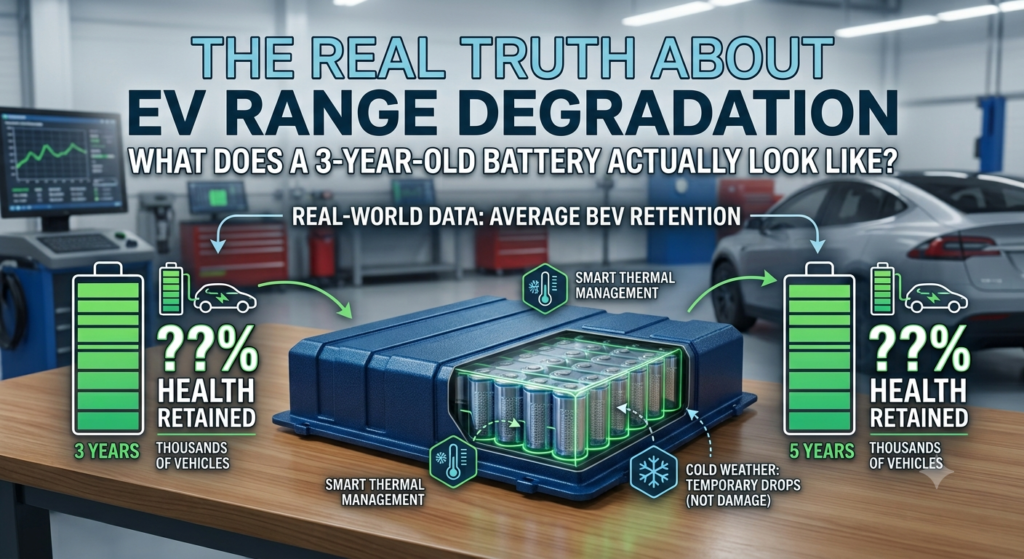
If you’re wondering why those early, rapid-degradation fears haven’t come to pass, the credit goes to something I like to call the “personal trainer” for your battery: the Thermal Management System.
Years ago, batteries were left to fend for themselves. Today, they are pampered. Your car is constantly monitoring the temperature of the battery cells. If it’s a scorching day in the middle of summer, the cooling system kicks in to keep things from getting stressed. If it’s a chilly morning here in Sweden, the system gently warms the pack to its “happy place.”
By keeping those cells in their optimal temperature range, the car prevents the chemical stress that causes long-term wear. It’s a sophisticated, automated process that happens in the background, ensuring your battery stays as healthy as possible for as long as possible. When you’re at the charger, the car is often managing those temperatures even while you grab a coffee, ensuring the process is efficient and safe.
Don't Panic About the "Winter Blues"
Now, I know what some of you are going to say. “Alan, that’s all well and good, but when the thermometer drops, my range meter takes a real dive!”
You’re absolutely right. Cold weather does impact range, and it can look pretty dramatic on the dashboard. But I want to make a really important distinction here: Temporary loss of efficiency is not the same thing as permanent battery degradation.
When it’s freezing outside, the air is denser, which makes all cars work harder to push through it. More importantly, the chemistry inside the battery slows down, and the car has to divert precious energy just to keep the cabin comfortable and the battery cells toasty.
That drop you see on your screen? That’s just the car using energy to deal with the elements. Once the sun comes out or the battery warms up, you’ll see that range bounce right back. Your battery isn’t degrading; it’s just having a “cold day at the office.” It’s a temporary performance dip, not a permanent retirement.
A Note for the Skeptical Friend
I often ask those who are worried about battery life: “What was the last time you bought a laptop or a smartphone?” We’ve all seen our phone batteries degrade over three years, right? The difference is that a phone is subjected to extreme temperature swings, rapid charging cycles that aren’t optimized, and constant high-heat usage.
EV batteries are a completely different animal. They are designed to operate under controlled, stable conditions. The longevity we are seeing in the wild is a testament to the fact that manufacturers have finally figured out how to build a battery that likes to be used.
The Numbers—The Real Story
At the end of the day, I’m a data guy at heart. I like to see the evidence before I get worried, and the aggregated data from thousands of modern electric vehicles is actually remarkably boring—in the best way possible.
The horror stories about batteries failing overnight belong to the very early days of EVs, when we were still figuring out the chemistry. Today? The picture is entirely different. Real-world telemetry across the industry shows that, on average, a modern BEV (Battery Electric Vehicle) battery retains about 97% of its original range after three years of ownership. Even after five years, you’re generally looking at a very healthy 95%.
Think about that for a second. If your car had a 400km range when it was brand new, after five years, you’re still sitting on a solid 380km. Honestly? Most of us wouldn’t even notice that 20km difference in our daily lives, especially considering how much of our driving involves quick trips to the shops or our regular commutes. The car isn’t “dying”; it’s just maturing.
My Two Cents
Look, I’ve been around the block a few times, and I’ve learned that the “common wisdom” is often about five years behind the actual technology. The data we have today is incredibly reassuring. For almost everyone reading this, your EV battery is likely to outlast the other mechanical components of the car.
We’re past the experimental phase. We’re in the era of reliable, high-performance battery tech. So, the next time someone tries to worry you with a horror story about expensive replacements, you can tell them to look at the data—and maybe suggest they take a modern EV for a test drive instead.
What has been your experience so far?
I’m always curious to hear what you’re seeing out there on the road, so do let me know!
Have you noticed much of a drop in your range over the years, or has your car been as steady as a rock?