OPINION:
TOYOTA’S “HALF-HEARTED” EV STRATEGY – A “SLAP IN THE FACE” TO CUSTOMERS
Written by SmartGrandad – BEV enthusiast and BEV owner for over 7 years.
SmartGrandads Opinion -
The Waiting Game That Never Ends
I’ve spent decades watching the automotive industry evolve, and for a long time, Toyota and Lexus were the gold standard for reliability and forward-thinking engineering.
I remember when the first Prius felt like a glimpse into the future. But lately, as SmartGrandad, a tech-savvy enthusiast watching the world shift toward a 100% electric future to combat climate change, I’m feeling more than a bit let down.
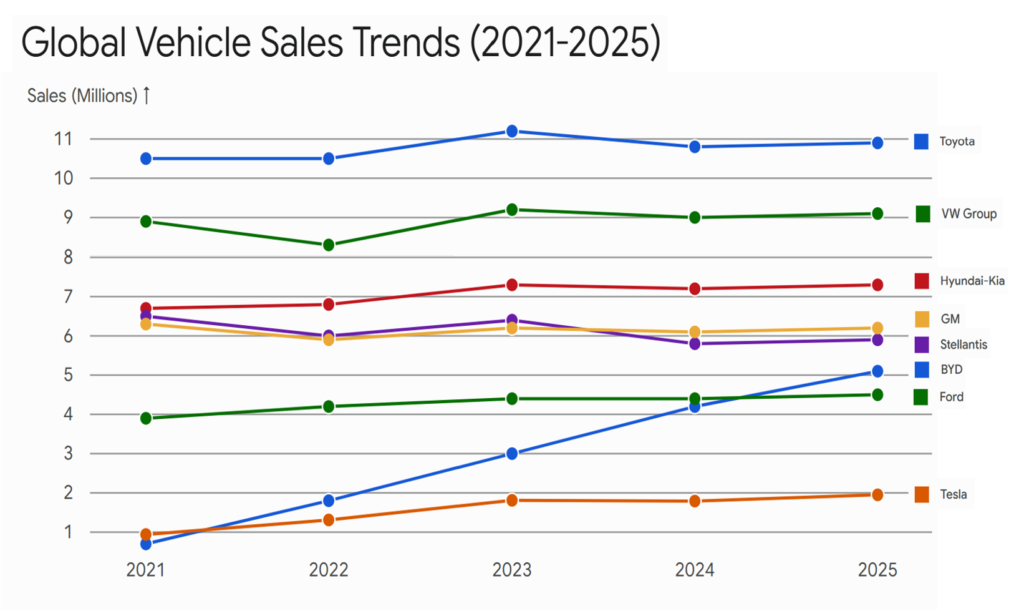
While other manufacturers are going “all in” on the electric revolution, TOYOTA the world’s largest automaker, who have 5 times the global sales of TESLA, seems perfectly happy to sit on the sidelines, dragging its feet and offering half-measures. It’s a frustrating waiting game that never seems to end.
The central conflict is clear: we all want to embrace a sustainable future, but some of our favourite brands are making it incredibly difficult to do so. In my decades of watching this industry, it’s clear that Toyota is deliberately holding its loyal customers back with products that simply don’t try hard enough. And in my opinion, a company the size of Toyota never does things by accident, so I can only assume that is their strategy.
Telltale Signs of EV Apathy
If you want to see what I mean by this, look no further than the Lexus ES 350e prototype. This executive sedan should be the pinnacle of luxury electric driving, but instead, it’s a collection of lazy “parts-bin” engineering choices.
When you look closely at the design, you see what I call “half measures”—clear evidence that Lexus didn’t want to break away from their old internal combustion engine (ICE) blueprints. If you ask me, these aren’t just design choices; they are the hallmarks of a manufacturer that isn’t even trying.
Glaring Design Issues
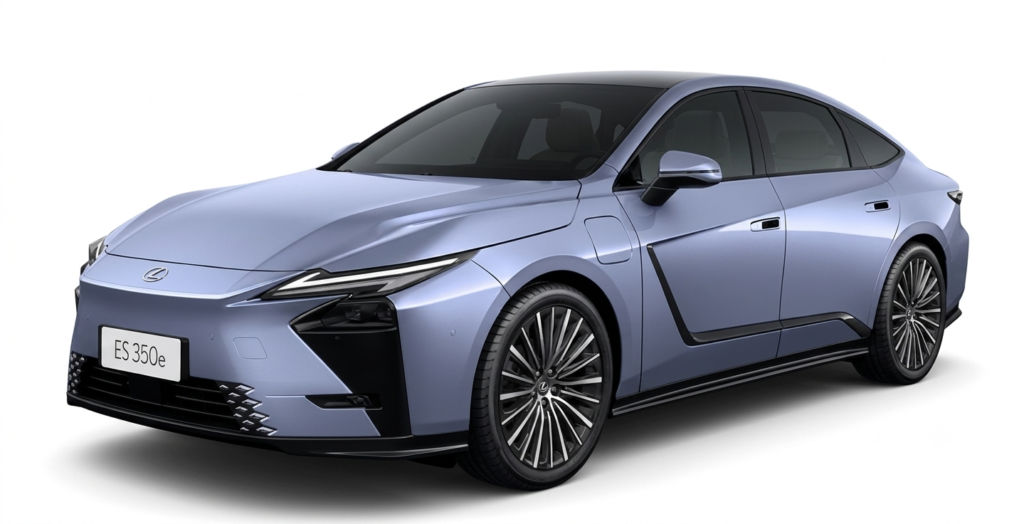
The Lexus ES 350e is supposed to be the pinnacle of Toyotas manufacturing capabilities, but has a number of glaring EV design issues;
- The Transmission Tunnel Hump: This is a front-wheel-drive EV with no drive shaft needed for the rear, yet there is a massive hump in the back seat floor. Why? Because they’re just using a gas-car frame.
- The Missing Frunk: In a large EV where the engine used to be, you should have extra storage. Lexus left it cluttered with components, offering zero front-trunk storage.
- The Software Smoking Gun: This is the most embarrassing part. In “Sport Mode,” the ES 350e display says: “Transmission shifts at higher RPM.” It’s electric! There are no RPM shifts! This shows they couldn’t even be bothered to update the software text from their gas models.
- Recycled Interior Layouts: The center console is a massive, bulky unit identical to a gas car, completely wasting the open-floor potential that a dedicated EV platform provides.
- Plus; Why do the doors require a “double-pull” to open? Why is the blinker so quiet you can barely hear it?, and no visual indicator on the driver’s screen?
So as if the design choices where not enough…..
Underwhelming Technical Specs:
When you look at the numbers, the disappointment only grows;
- Built on Toyota/Lexus’s dedicated 400-volt EV platform
- Lithium Phosphate Battery 72 kWh (74.7 kWh nominal)
- Moderate 150 kW maximum DC fast-charging speed
- WLTP range of 250 miles, realistic around 220 miles
- Single motor, front wheel drive, 0–100 km/h (0–62 mph) 7.6 seconds.
- 14-inch touchscreen and a built-in dashcam
- No support for V2L, V2H, or V2G.
- No one-pedal driving
Imagine paying $60,000 for a luxury Lexus only to have it performance like a decade-old Nissan Leaf. It’s an insult.
The Toyota EV Lineup: Compliance Over Quality
Toyota (inc. Lexus) is filling its EV ranks with models like the bZ4X, the C-HR+, the Urban Cruiser, Lexus RZ 550e F-Sport, and the Lexus ES 350e. On paper, it looks like choice. But what we are getting are “compliance cars” that are “fine,” but “fine” doesn’t lead a revolution. It’s half-baked engineering hidden behind a famous badge.
Warranties are on par with most of the competition, but a long warranty is a hollow promise if the car itself is boring to drive and technically under equipped. Coming from the worlds largest car producer, where is the “wow factor”?
SmartGrandad’s Final Thoughts
Is Toyota Risking Its #1 Global Spot?
Toyota is a titan. They own parts of Subaru and Denso; they have more resources than almost anyone else on the planet. It’s my firm belief that Toyota is playing a dangerous, cynical game. By holding back on expensive, ground-up EV development and sticking to recycled ICE layouts to protect their current profit margins, they are allowing every other competitor to leapfrog them. They are banking on your brand loyalty to keep you buying mediocre, “stuffed-battery” leftovers.
But as has been the case with other corporate giants, just ask the Chinese, German and American manufacturers, you must move with the times and let you customers decide what they want. Offering 2nd best products is rarely a recipe for success.
Conclusion: If They Won’t Take the Future Seriously, Why Should Customers?
At the end of the day, it feels like Toyota and Lexus are building EVs because they have to, not because they want to. They are meeting a regulatory requirement, not chasing a vision. Customers deserve cars that take advantage of the quiet, spacious, and powerful potential of electric flight—not gas car skeletons with a plug shoved into them.
Whats your view?
If you have any other thoughts or comments on this or any other 100% EV topic please leave them in the Contact Form below.
Written by SmartGrandad – BEV enthusiast and BEV owner for over 7 years.