100% EV “EASY” GUIDE 17:
Driving & Living on Sunshine: Why Your Next EV Should Power Your Home
NEW
Written by SmartGrandad – BEV enthusiast and BEV owner for over 7 years.
Get More Out Of Your EVs Battery
If you’ve taken the plunge into driving a 100% battery electric vehicle (BEV), you already know the immediate joys: zero tailpipe emissions, silent acceleration, and never having to stand at a smelly petrol pump again.
But there’s a quiet revolution taking place right in our driveways that goes way beyond getting from A to B. It’s called Vehicle-to-Home (V2H) technology, and it turns your EV from a simple mode of transport into a massive, rolling energy storage unit.
If you’ve ever wondered how to lower your electricity bills or get more out of your home solar setup, this is the shift you need to know about.
What Is Vehicle-to-Home (V2H)?
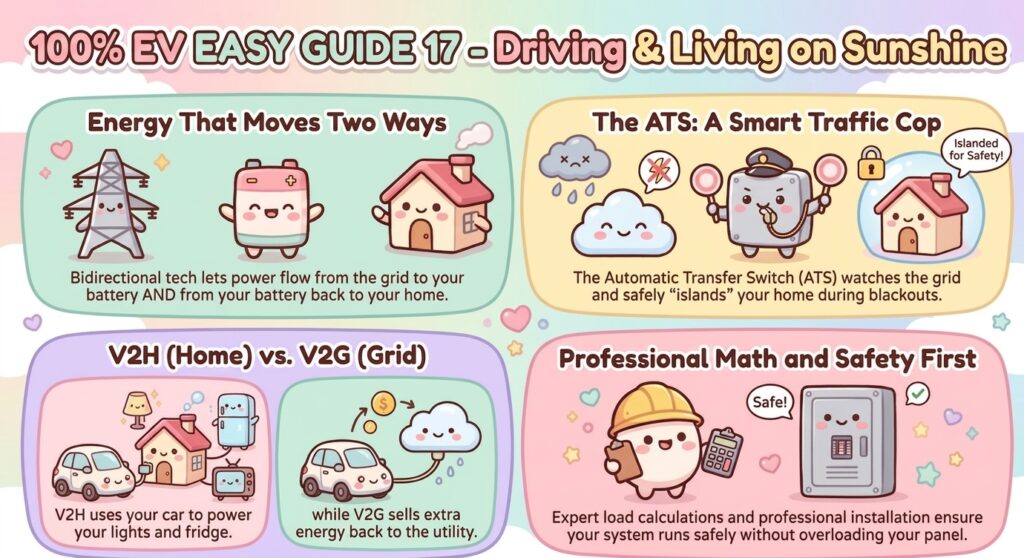
In simple terms, V2H allows electricity to flow both ways.
Normally, electricity moves one way: from the grid (or your roof) into your car’s battery. With V2H (or bi-directional charging), your car can send that stored energy right back into your house during peak demand hours.
Think about the numbers for a second:
- A typical home battery storage unit holds around 5 kWh to 10 kWh of energy.
- A modern electric SUV holds anywhere from 75 kWh to over 90 kWh of usable capacity.
That means your car has enough stored energy to run a normal home for several days if needed.
[ Solar Panels ] │ ▼ [ Home / Inverter ] ◄── (Bi-Directional) ──► [ Your EV Battery ] ▲ (75 – 90+ kWh) │ [ The Grid ]How It Saves You Money (The SmartGrandad Way)
You don’t need to be a tech wizard or spend hours tweaking settings to benefit from this setup. The magic happens when you pair V2H with dynamic energy prices or rooftop solar panels.
1. Store Cheap Off-Peak Energy
If you’re on a variable energy tariff, power is significantly cheaper late at night when demand across the country drops. Your EV charges up on cheap grid power overnight. During the day—when grid prices spike—your house draws power from the car instead.
2. Soak Up Surplus Solar
If you have solar panels on your roof, summer afternoons often create more power than your home can consume. Instead of selling that power back to the grid for pennies, feed it directly into your EV’s massive battery pack. At night, discharge a fraction of it back to run the lights, heat pump, or induction hob.
Is It Safe for the EV Battery?
It’s the most common question I hear from fellow EV drivers: “Won’t constantly discharging into my home wear out my expensive car battery?”
The short answer is: hardly at all.
Powering household appliances draws power at a relatively slow, gentle rate (usually around 3 kW to 7 kW). Compared to the heavy load of accelerating a 2.5-tonne car up a steep highway incline or fast-charging at 250 kW DC, household power draws cause negligible battery wear. Modern lithium-ion and LFP chemistries easily handle these mild discharge cycles over long ownership periods.
What Do You Need to Get Started?
To make V2H work, three pieces of the puzzle need to align:
- A V2H-Compatible EV: Models supporting bi-directional power transfers (such as recent 800V platforms, select Hyundai/Kia models, XPENG, Nissan Leaf via CHAdeMO, and emerging European BEVs).
- A Bi-Directional Charger: A specialized home wallbox capable of directing power from the car back into the home’s main distribution panel.
- Smart Energy Management System: Software (or a smart home hub) that coordinates when to charge and when to discharge based on real-time electricity rates.
SmartGrandads Final Thoughts - The Bottom Line
Electric cars are no longer just about displacing diesel and petrol; they are key components of a modern, smart energy home. By letting your vehicle double as a home battery storage system, you gain energy independence, lower your monthly utility costs, and maximize every kilowatt of clean energy you produce.
Got questions about bi-directional charging or setting up your EV with home solar? Drop a comment below or join the discussion in the SmartGrandad forum!
SmartGrandad Would Love To Hear Your Views.
Written by SmartGrandad – BEV enthusiast and BEV owner for over 7 years.