OPINION:
2026 Top 5 Battery Electric Vehicles for Long Journeys
Written by SmartGrandad – BEV enthusiast and BEV owner for over 7 years.
The Golden Duo: Why 500km Range AND 800V Architecture Matter
When choosing an EV that is capable of your daily commute AND long distance road trips, in My Humble Opinion, a truly great Battery Electric Vehicle (BEV) must meet two non-negotiable standards.
- : a WLTP range of at least 500km and
- an 800V platform architecture.
These aren’t just numbers on a spec sheet; have these 2 capabilities means relaxing journeys and “quick Pit Stops”.
So, if you are a regular long distance commuter or you love those long road trips, Smartgrandads advice is only review EV that met these 2 criteria. This has served me well with my current EV (Xpeng G9 Performance).
See Smartgrandads 2026 Top 5 Long Distance BEVs…..
The 500km Buffer
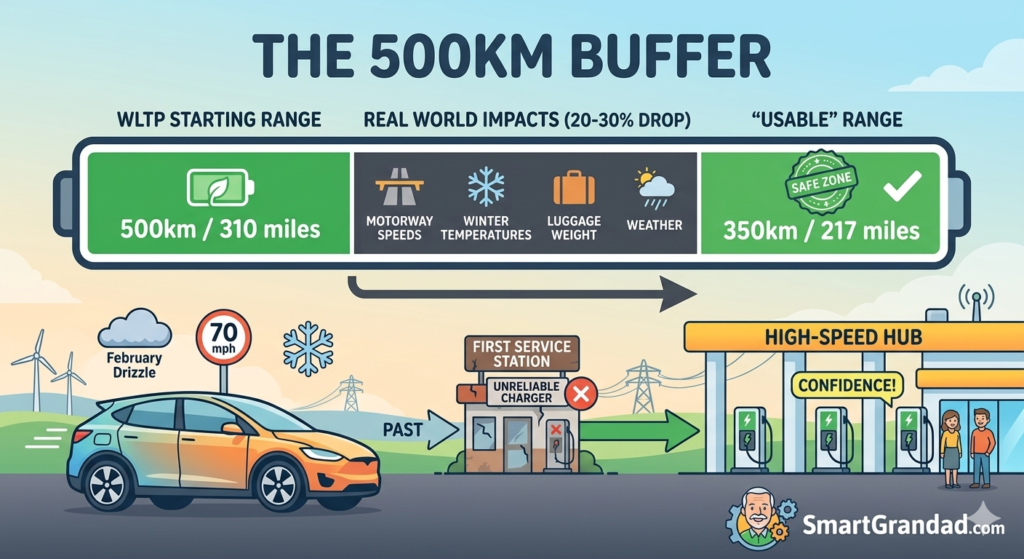
A 500km (approx. 310 miles) WLTP rating is the essential starting point because the real world is rarely “ideal.” Between motorway speeds, winter temperatures, and a boot full of luggage, you can expect a 20–30% drop from those laboratory figures.
By starting with 500km, you ensure that even in the worst conditions—70mph in a February drizzle—you still have a rock-solid 350km of “usable” range. This allows you to skip the unreliable charger at the first service station and push on to a high-speed hub with confidence.
The 800V Speed Advantage
However, range is only half the story. If your 500km battery takes an hour to charge, your journey still feels like a chore.
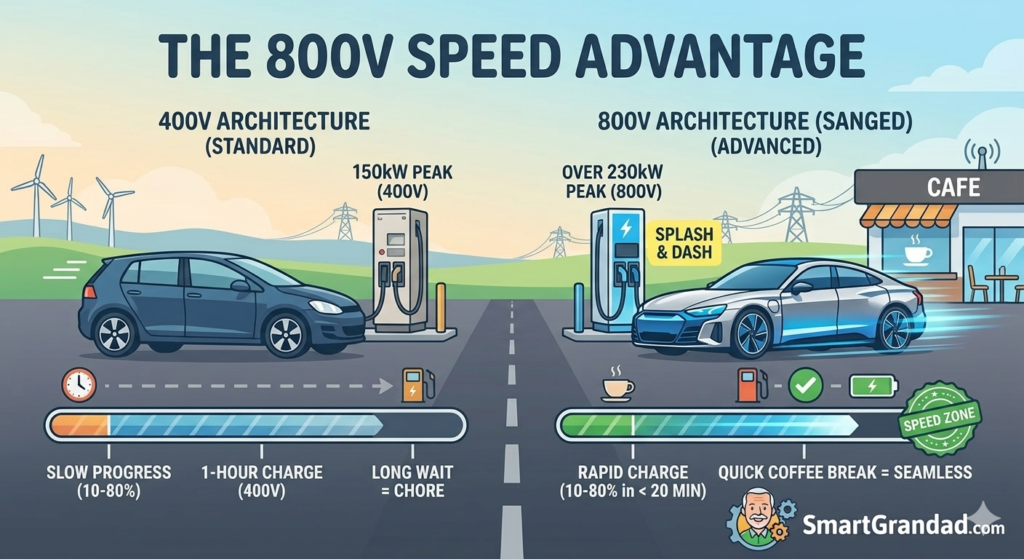
This is where 800V architecture changes the game. While standard 400V cars often peak at 150kW and only for short periods.
800V systems (found in cars like the Audi Q6, Kia EV6, Xpeng (all models) or Hyundai IONIQ 6) can pull over 230kW across a large portion of the charging curve.
This translates to a “splash and dash” stop—going from 10% to 80% in under 20 minutes. It turns a long charging session into a quick coffee break, making the EV experience feel as seamless as the petrol stops of old.