Hyundai Ioniq 6
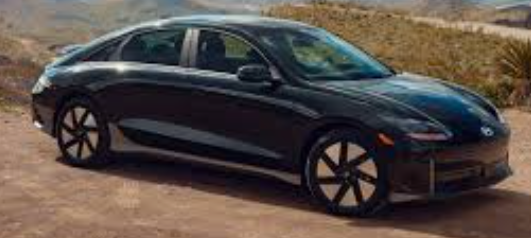
1. Body Style and Size Segment
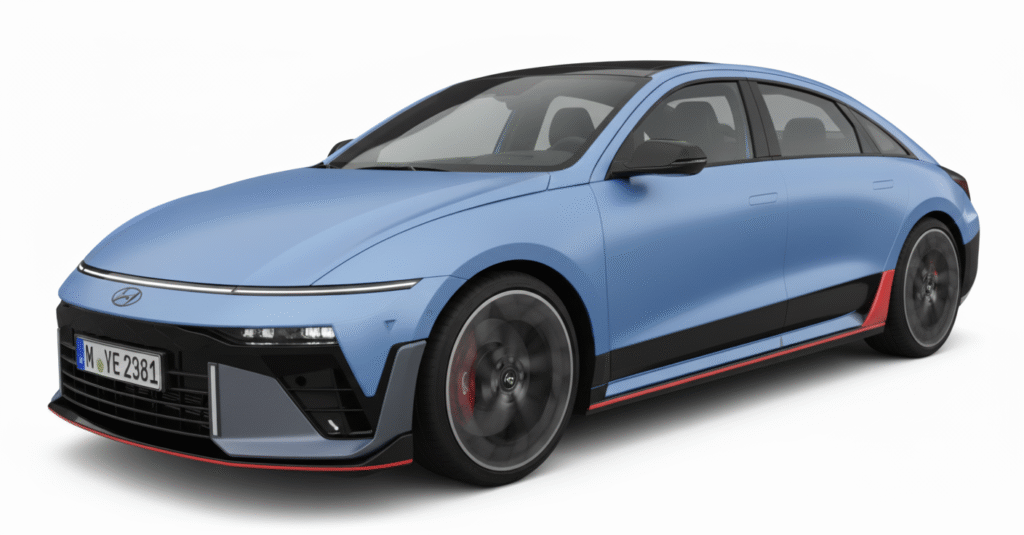
The Ioniq 6 is a 4-door “electrified streamliner” sedan, placing it in the mid-size to large sedan segment. Its dimensions are 4855mm (L) x 1880mm (W) x 1495mm (H), with a wheelbase of 2950mm, contributing to its aerodynamic silhouette and spacious interior.
2. Platform Architecture, Voltage, Range & Efficiency
Built on Hyundai’s Electric-Global Modular Platform (E-GMP), the Ioniq 6 utilizes an 800V architecture, enabling ultra-fast DC charging. It offers a 53 kWh or 77.4 kWh battery. The 77.4 kWh RWD variant achieves up to 614 km (WLTP) range, with impressive efficiency as low as 13.9 kWh/100km.
3. Technical Capabilities
The Ioniq 6 features advanced driver assistance with Hyundai SmartSense. This includes Highway Driving Assist 2 (HDA 2) for Level 2 autonomous driving, Remote Smart Parking Assist 2 (RSPA 2), Forward Collision-Avoidance Assist (FCA 2), and Blind-Spot View Monitor (BVM), enhancing safety and convenience.
4. Interior Quality and Storage Capacity
The interior boasts a minimalist, high-tech design with dual 12.3-inch displays and quality materials, including recycled plastics. Rear legroom is generous. Cargo capacity is 401 liters in the rear trunk. It has a small frunk of around 0.45 liters.
5. App Functionality
Hyundai’s Bluelink app offers comprehensive remote control and monitoring. Features include remote door lock/unlock, alarm notifications, vehicle status checks, remote climate control, charging scheduling, and sending navigation destinations to the car. Over-the-air updates ensure current software.
6. 3 Pros and 3 Cons
Pros: Excellent range and ultra-fast 800V charging, distinctive and aerodynamic design, spacious and tech-rich interior. Cons: Polarizing exterior styling, limited rear cargo space, and some road noise at higher speeds.
7. Overall Summary
The 2025 Hyundai Ioniq 6 stands out with its unique design, exceptional charging speed, and long range, making it a compelling choice in the EV sedan market. Compared to competitors like the Tesla Model 3 or Polestar 2, the Ioniq 6 offers a distinct aerodynamic aesthetic and often superior charging capabilities, while providing a comfortable and technologically advanced cabin. However, its “streamliner” shape prioritizes efficiency over traditional cargo utility.
Real world range estimates
The table below shows some estimated real-world examples in perfect condition and in conditions needing A/C to heat or cool vehicles. See our range guide to see how the range is affected in real world.
| Range | Consumption | |
|---|---|---|
| 90kmh/56mph perfect condition | 493km / 306 mi | 15 kWh/100km / 4,1 mi/kWh |
| 90kmh/56mph with 2KW heating | 444km /267mi | 17,2 kWh/100km /3,6 mi/kWh |
| 70mph/112kmh perfect condition | 411 km / 255 mi | 18 kWh/100km / 3,5 mi/kWh |
| 70mph/112kmh with 2KW heating | 374km / 232mi | 19,8 kWh/100km / 3,1 mi/kWh |
| 120kmh/75mph perfect condition | 352 km / 219 mi | 21 kWh/100km / 3,0 mi/kWh |
| 120kmh/75mph with 2KW heating | 326 km /203mi | 22,7 kWh/100km /2,7 mi/kWh |
– Related Posts
, €55k–60k / £48k–52k / $63.8-69.6k
, €60k–65k / £52k–57k / $69.6k-75.4k
, €65k–70k / £57k–61k / $75.4k-81.2k
, €70k–75k / £61k–65k / $81.2k-87k
, €75k–80k / £65k–70k / $87k-92.8k
, 0800v (DC Ultra Charging)
, HYUNDAI
, NMC(Nickel Manganese Cobalt)
, O. OTHER SIZE
, PICKUP
, Reviews
, WLTP 500-599 km /310m-372m
, €65k–70k / £57k–61k / $75.4k-81.2k
, €70k–75k / £61k–65k / $81.2k-87k
, €75k–80k / £65k–70k / $87k-92.8k
, 0800v (DC Ultra Charging)
, E. FULL-SIZE
, HYUNDAI
, NMC(Nickel Manganese Cobalt)
, SUV(SPORTS UTILITY VEHICLE)
, V2G (Vehicle To Grid)
, V2H (Vehicle To Home)
, V2L (Vehicle To Load)
, WLTP 600-699 km /372m-435m
, €50k–55k / £44k–48k / $58k-63.8k
, €75k–80k / £65k–70k / $87k-92.8k
, 0800v (DC Ultra Charging)
, D. MID-SIZE
, HYUNDAI
, NMC(Nickel Manganese Cobalt)
, Reviews
, S. SPORTS CARS
, SALON/SEDAN
, SPORTS CAR
, V2G (Vehicle To Grid)
, V2H (Vehicle To Home)
, V2L (Vehicle To Load)
, WLTP 600-699 km /372m-435m