BYD Dolphin (2027): Premium Value & Space-Efficient Compact Hatchback (Buyer Score 8.2/10)NEW
1. MODEL OVERVIEW
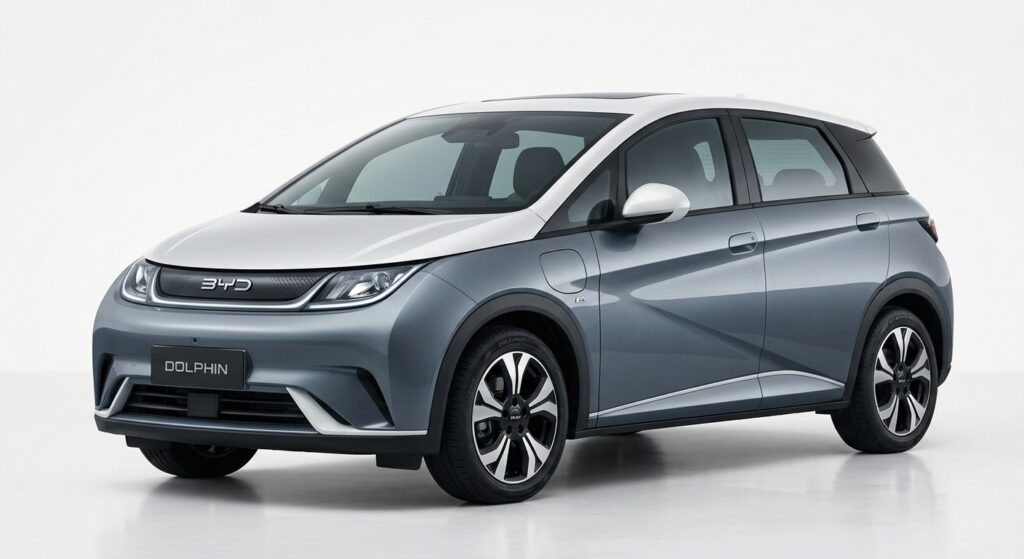
🐬 1. SMARTGRANDADS OVERVIEW
The 2027 BYD Dolphin is a highly competitive B-segment electric hatchback built on BYD’s dedicated e-Platform 3.0. It features structural LFP Blade Battery technology, standard heat pump efficiency, and a surprisingly spacious cabin courtesy of a long 2,700 mm wheelbase.
WLTP Range: 427 km (265 miles) for Premium trim / 340 km (211 miles) for Active trim
Warranty: 6 Years / 150,000 km (Vehicle), 8 Years / 200,000 km (Battery)
Price Range: €30,000 – €37,000 / £26,000 – £31,000 / $28,000 – $34,000
Sold In: UK, Europe, Australia, New Zealand, SE Asia, Latin America
PCP Monthly Cost (UK): Approx. £240 – £290/month
🐬 2. SMARTGRANDADS BUYERS SCORE: 8.2/10
2.1. Home Charging Speed & V2 Capabilities — Score: 8.5/10
11 kW 3-phase AC onboard charger standard on upper trims (7.4 kW 1-phase on base).
Standard Vehicle-to-Load (V2L) capability delivering up to 3.3 kW discharge power.
Lacks V2H/V2G bi-directional grid integration capabilities.
2.2. Max Charging Speed & Curve — Score: 7.0/10
Peak DC fast charging caps at 88 kW (60.48 kWh pack), completing 10-to-80% SOC in 29 minutes. Flat initial curve drops quickly past 70% SOC.
2.3. Real-World Efficiency — Score: 8.5/10
High efficiency delivered via standard heat pump and aerodynamic shape.
Average consumption: 15.9 kWh per 100 km (3.9 Miles per kWh).
Highway speeds noticeably increase energy draw due to upright profile.
2.4. Software, OTA Updates & Navigation — Score: 8.0/10
12.8-inch electric rotating touchscreen with smooth Android-based DiLink software.
Supports Over-The-Air (OTA) system updates and wireless Apple CarPlay / Android Auto.
Native navigation includes charging station lookup, but route planning with live pre-conditioning auto-stops is basic.
2.5. Battery Technology & Chemistry — Score: 9.0/10
Cobalt-free Lithium Iron Phosphate (LFP) BYD Blade Battery.
Cell-to-Pack (CTP) integration ensures superior thermal stability and puncture safety.
Supports high state-of-charge cycling with minimal degradation over time.
2.6. Battery & Vehicle Warranties — Score: 8.0/10
6 Years / 150,000 km bumper-to-bumper vehicle coverage.
8 Years / 200,000 km battery degradation warranty (guaranteeing 70% SOH).
Requires strict 12-month / 20,000 km service intervals to maintain full warranty terms.
🐬 3. SPECIFICATIONS & REAL WORLD CAPABILITIES
3.1. Dimensions and Space
Body Style and Vehicle Size: Hatchback / B-Segment Compact Hatchback
Luggage Space: 345 Litres (Expandable to 1,310 Litres with rear seats folded)
3.2. Practicality & Target Customer
How Many Suitcases/Adult Passengers: 4 medium suitcases / 4 adult passengers comfortably
Type of Customer: Ideal for urban families, commuters, and downsizing EV buyers seeking maximum cabin space and low running costs in a compact footprint.
Advantages of this Body Style: Compact exterior dimensions allow effortless city parking, while short overhangs create executive-level rear legroom.
3.3. Battery Type & WLTP Range
Battery Size & Type: 60.48 kWh (Usable) LFP BYD Blade Battery
WLTP Range (Overall): 427 km (265 miles)
WLTP Range (City): 520 km (323 miles)
WLTP Range (Motorway): 310 km (192 miles)
3.4. Real World Capabilities
Real-World Summer Range: 370 km (230 miles)
Real-World Winter Range: 290 km (180 miles)
Towing Capacity (Braked): 500 kg
Roof Load: 50 kg
3.5. Electrical System & Charging
Platform Voltage: 400V Nominal Architecture
Max Charging Speed (DC): 88 kW
AC Maximum Charging Speed: 11 kW 3-phase (7.4 kW 1-phase)
3.6. Efficiency, Charging Time & Journey Suitability
Overall Efficiency: 15.9 kWh per 100 km (3.9 Miles per kWh)
Typical 10-80% Charge Time: 29 Minutes
Journey Suitability: Outstanding for daily city driving, suburban commuting, and occasional cross-country regional trips with planned charging stops.
3.7. Performance
Acceleration (0-100 km/h / 0-62 mph): 7.0 seconds
3.8. Driving Dynamics
Driver Experience: Softly sprung for excellent low-speed urban comfort, though steering lacks tactile feedback and body roll becomes noticeable under spirited cornering.
🐬 4. WHO SHOULD BUY OR NOT BUY THIS 100% EV MODEL
4.1. Do Buy If…
You need generous rear legroom in a short, easy-to-park vehicle footprint.
You prioritize long-term battery durability and maximum safety via LFP chemistry.
You want high standard equipment levels (rotating touchscreen, heat pump, 360-degree cameras).
You primarily use your car for city commuting and regional driving.
You want V2L functionality to power external electronics and appliances on the go.
You are looking for low operating costs and strong value-for-money warranty coverage.
4.2. Don’t Buy If…
You regularly take long cross-country road trips requiring 150+ kW ultra-fast charging stops.
You expect sport-focused driving dynamics, firm handling, and communicative steering.
You require a heavy towing capacity above 500 kg.
You need a massive boot with rear seats in place (345L is average for the segment).
You dislike centralized touchscreen-heavy control layouts for climate and vehicle settings.
You frequently travel at sustained high motorway speeds where range drops rapidly.
🐬 5. SIMILAR – COMPETING 100% EVs
MG4 EV (Score: 8.4/10) — A dynamic, rear-wheel-drive electric hatchback offering sharp handling and great value.
Renault 5 E-Tech (Score: 8.6/10) — Retro-styled urban EV boasting lightweight efficiency and engaging road manners.
Volvo EX30 (Score: 8.1/10) — A stylish subcompact premium crossover with rapid acceleration and Scandinavian design.
Peugeot e-208 (Score: 7.8/10) — A polished French electric supermini offering a high-end interior feel.
Vauxhall/Opel Corsa Electric (Score: 7.7/10) — Practical, conventional hatch providing a sensible entry into zero-emission driving.
Fiat Grande Panda EV (Score: 8.0/10) — Affordable, blocky-styled city car designed for low-cost everyday motoring.
Citroën ë-C3 (Score: 8.2/10) — Budget-friendly crossover hatchback emphasizing ultra-soft suspension comfort.
Volkswagen ID.3 (Score: 8.0/10) — Larger C-segment electric hatchback featuring rear-wheel drive and a spacious cabin.
Cupra Born (Score: 8.3/10) — Sporty sibling to the VW ID.3 with aggressive styling and stiffer suspension tuning.
Hyundai Inster (Score: 8.3/10) — Ultra-compact A-segment crossover packing surprisingly versatile seating configurations.
🐬 6. RECOMMENDED -YouTube- REVIEW
6.1. Main Highlights
[00:00] Lower Starting Price and Larger Battery: BYD has launched the updated Seal 07 EV in China with a price drop of roughly 12% (down to 149,900 yuan) and equipped all versions with the upgraded Blade 2 battery and flash-charging capabilities.
[04:09] The Trade-Off in Driver Assistance Equipment: While the base model gets the same large battery and charging specs, it downgrades to conventional cruise control, omitting the advanced “God’s Eye” adaptive cruise and lane-keeping tech found in the mid and flagship trims.
[07:16] Increased Dimensions and Performance: The refreshed model is over 5 mm longer with an extended wheelbase, a rear-mounted motor producing 245 kW (329 hp), and a faster 0–100 km/h acceleration time of 5.5 seconds.
7. SG OTHER MODELS FROM THIS MANUFACTURER

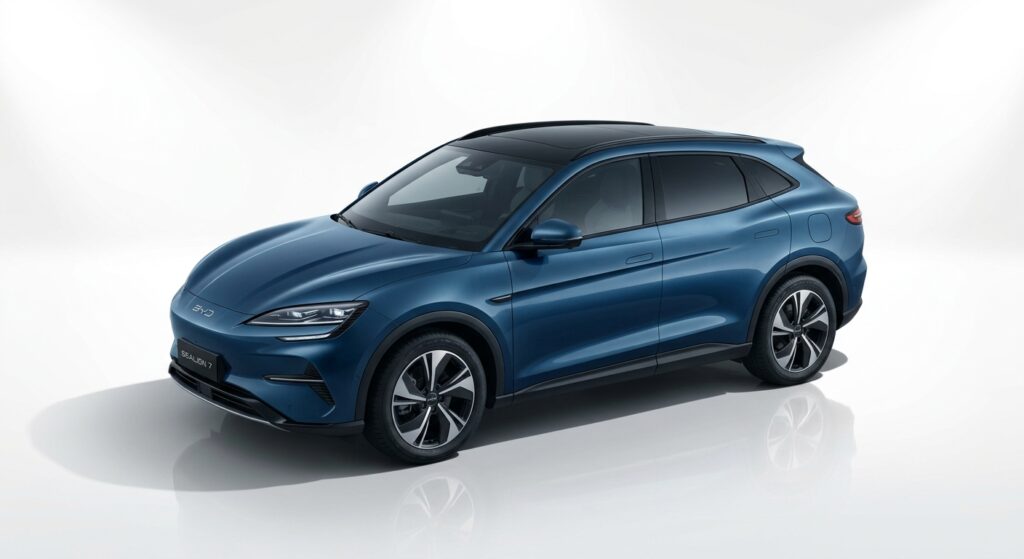
, €45k–50k / £39k–44k / $52.2-58k
, €50k–55k / £44k–48k / $58k-63.8k
, €55k–60k / £48k–52k / $63.8-69.6k
, 0800v (DC Ultra Charging)
, BYD
, COUPE/FASTBACK
, D. MID-SIZE
, LMFP BLADE Gen 2 (Lithium Manganese Iron Phosphate)
, Reviews
, SG Buyers Score: 8.6
, V2L (Vehicle To Load)
, WLTP 400-499 km/249m-310m
, WLTP 500-599 km /310m-372m


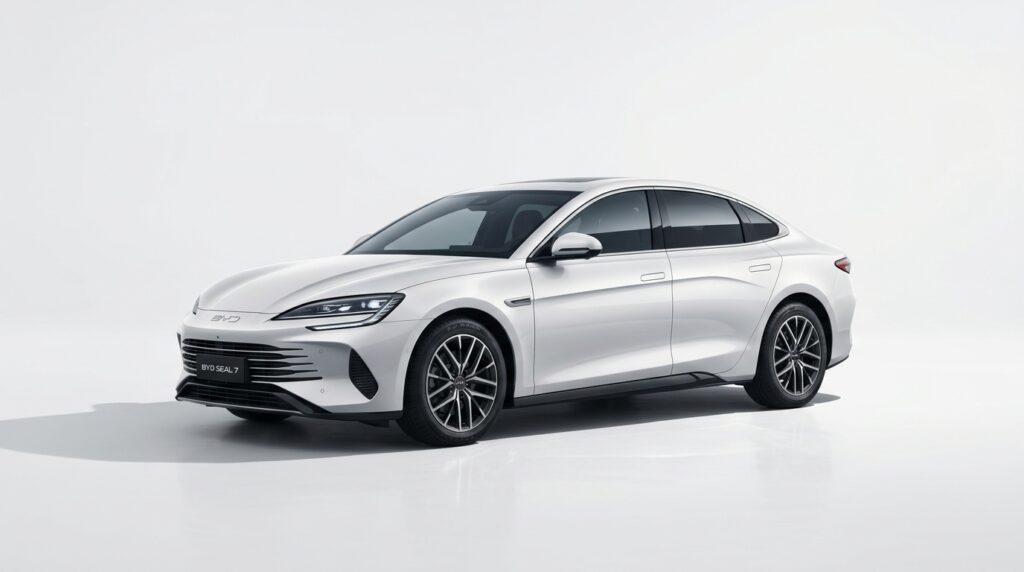


, €15k–20k / £13k–17.5k / $17.4k–23.2k
, €20k–25k / £17k–22k / $23.2k–29k
, €25k–30k / £22k–26k / $29k–34.8k
, 0400v (DC Fast Charging)
, B. SUBCOMPACT
, BYD
, HATCHBACK
, LFP(Lithium Iron Phosphate)
, V2G (Vehicle To Grid)
, V2L (Vehicle To Load)
, WLTP 300-399 km /186m-249m
, WLTP 400-499 km/249m-310m


